A post submitted by CGI member ScienceTruth.
**************************
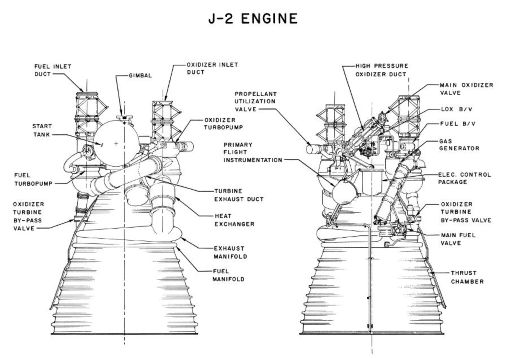
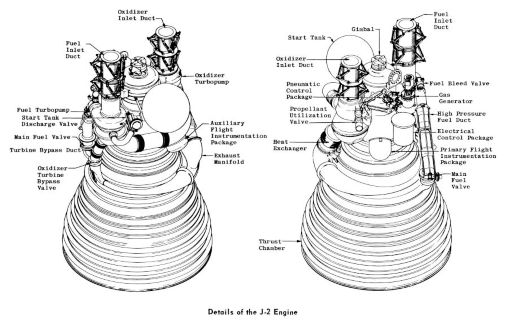
The Rocketdyne J2 Rocket Engine
A Critique of, and Corrections to: "We Never Went to the Moon"
** In this week's 'run up' to the grand Celebration Day of the USA's 250th Anniversary of the signing of the Declaration of Independence, which is on Saturday, I'd like to do this week a 'brief history' in several parts; on the origin, development, and success, of the liquid rocket engines that enabled our "going to the Moon and back again" !! , or as the Hobbit 'Baggins' might say it, "There and Back Again" !! , although this is a true story !! and not an allegorical tale ! **
Bill Kaysing's 'pamphlet style' 87 page book "We Never Went to the Moon", written in the 1970's, has 7 photos of the Santa Susanna Test Facility in the hills northwest of Canoga Park, in the San Fernando Valley area of greater Los Angeles, CA. [1]
However, Bill makes numerous 'errors' in his analysis of photos 'taken of Space, from and on the Moon', which definitely need correcting !!
He does make some good critiques of things done, that are quite 'suspicious', as involved in the Space Program, and that the government never addressed nor 'cleared up', so let's "get to it" !
Now, as Bill worked with the "technical publications department" at Rocketdyne he wasn't a 'scientist' by trade, and that's likely why he made the 'errors' further-on in his book in his analysis of the space and Moon photos etc. But, that said, the lack of 'disturbance' of the Lunar surface under the LEM and other craft that 'landed' on the Moon, does need an explanation in my opinion, so Bill has some very serious credibility here !!
Now, as I haven't "been to the Moon" either, I'm not the 'last word' on this subject ! And to Bill's credit, on the last page of Appendix B, he does say in the Conclusion section on page 87:
"Obviously, it will take the efforts of many experts to prove or disprove the Moon conspiracy theory. But, as with any puzzle, the cooperation of many minds may solve it once and for all. Please help if you can.
"In closing, if the Truth is that we went to the Moon, I will make a public apology for even suspecting the people involved in such a gigantic hoax and swindle. If the Truth is that we did Not go to the Moon, may God have mercy on certain souls."
In my opinion, and I'm the writer of this article; We Did Go To The Moon, and I will 'help' to 'clear up' Bill's errors, and do what I can with what I do know about it all, so as to 'help settle' this issue herein; at least as far as my knowledge, personal knowledge, and intuition, go, concerning the issues involved.
Now, in doing as full an analysis as possible on all of this subject, I may need to get a little too personal about my Dad and myself, but I think it's important and that it helps to put a personal 'face' on all of this 'investigation' and 'observation' as involved herein; and I'll do my best to not divulge any data or information that is still Confidential or Classified !! (not that I have knowledge of any Classified information, I'm quite certain that I don't) All of what is presented here as data, charts, photos, or diagrams; were accessed from public websites, or search engine results, and as such, if the photos or diagrams etc have the words "Classified" or "Confidential" on them, I am assuming that they have, since their 'creation', now been Declassified ! as they were on public websites where I obtained them.
Let's begin with some important 'backstory'. The Rocketdyne J2 Rocket Engine was the First and Most Important Major Big Development in rocket engine design systems ever accomplished !!! , it is very complicated in its integration of the numerous systems that compose its total operation and systems design !!!
- -
As a caveat: The J2 may have used some aspects of earlier development and some basic systems designs as used on the Atlas rocket engine, in years earlier. Atlas is a family of US missiles and space launch vehicles that originated with the SM-65 Atlas. The Atlas intercontinental ballistic missile (ICBM) program was initiated in the late 1950s by General Dynamics through its Convair division. Atlas was a liquid propellant rocket burning RP-1 Kerosene fuel with Liquid Oxygen in a "three engines 'in-a-row' configuration", as configured in the very unusual "stage-and-a-half" or "parallel staging" design: the two outboard booster engines were jettisoned along with supporting structures during ascent, while the center sustainer-engine, propellant tanks and other structural elements remained connected and kept firing, through and until propellant depletion and final engine shutdown.
The Atlas rocket propellant tanks would collapse under their own weight if not kept pressurized by nitrogen gas in the big tanks when devoid of propellants. The Atlas booster was unusual in its use of these "balloon" tanks. The rocket's tanks were made from very thin stainless steel that offered minimal or no rigid support. It was the supplied pressure in the tanks that gave the rigidity required for launch and space flight. In order to save weight they were not painted and needed a specially designed oil to prevent rust. This was the original use of WD-40 the later commercial water displacement product.
The SM-65 Atlas was used as a first stage for satellite launch vehicles for half a century. Many were eventually converted to orbital launch vehicle use after they were removed from service as military missiles. Missiles converted into Atlas E/F "space boosters" were used to launch the early "Block I" GPS satellites. [2]
Starting in the mid-1990's with the Atlas III P&W (Pratt and Whitney) decided to jointly produce and use Russia 's Energia RD-180 engine. Only one 400-ton thrust RD-180 engine is used. (800,000 lbs thrust) The reason is that the RD-180 was the best engine at the time, the price was very cheap ($10 million per unit), and there was a need to provide work to prevent the former Soviet rocket technology from flowing to other countries. Of course, in the 2010s, the relationship between the United States and Russia worsened due to the Ukraine crisis, and high-ranking people such as John McCain were getting annoyed by telling them not to give money to Vladimir Putin's cronies, and the Russian government was also getting angry, and it will now not allow Russian engines to be exported for use in launching American military rockets.
So, the United States is developing a new rocket using an American engine instead of the RD-180, and after 2020, SpaceX 's Falcon 9 , Falcon Heavy or Orbital ATK 's Antares. [3]
From the U.S. perspective, it is still too risky to use prototype commercial rocket engines to launch expensive reconnaissance satellites, and the Russian government could not afford to miss out on the U.S., its biggest customer in the space field. Thanks to this, the United States even removed Russian rocket engines from its economic sanctions list.
- -
Returning to Rocketdyne's story, The J2 was a nominal 200,000 pounds-of-thrust engine, and all future engines using LOX and H2, like the F1 Million pounds-of-thrust main engine for the Voyage to the Moon used the J2 as the design model for the F1, whose entire systems design is basically exactly the same as the J2, but larger in specifics for additional power, and as Dad said, "To get one million pounds-of-thrust you gotta pump 1,000 pounds of propellant Per Second thru the Thrust Chamber." !!! LOX is 6 lbs per gallon and H2 is 1 pound per gallon ! (apx), but you need 2 gallons of H2 per 1 gallon of LOX, because the 'exhaust products' are water !! H2O !! , talk about 'clean' !! no toxic fumes here !! Now that's a lot of Gallons per Second !! thru a 'cylinder' about 16" or 18" in diameter and about 24" tall !! and the exhaust gasses are moving at a 'supersonic velocity' when they 'exit' the F1 nozzle 'skirt' !! This is why, when you hear a rocket launch at Cape Canaveral, there is that 'resounding roar' !!! it is the supersonic gases 'breaking the sound-barrier' as they exit the engine nozzle !!! (yeah, "the things we never knew", because They never told us enough of the details !) The J2 exhaust gases are also supersonic on exiting their nozzle skirt !
As an important Side Note: Dad worked at Rocketdyne from June 1958 to Spring 1969 when North American, the owner of Rocketdyne, laid-off all the 'older high-priced help' !! and hired many young 'low-priced guys' who were leaning how to operate and program computers !! because before, all the technical work was done with "slide rules" !!! as computers in those earlier days were as big as a garage !! and were not able to do the complex computations necessary in the 'juggling of systems dimensions' in order to find the best combination of 'sizes' for the various systems involved. e.g. the 'tubes' that compose the 'cooling jacket' on the exhaust nozzle !! to keep it from 'melting' !! as the combustion gasses are about 5,700 Fahrenheit !!! What size tubing, and what pressure is best used, or possible to use, per tubing dimension and length, in order to get the required amount of propellants into the Thrust Chamber, and have the propellants at the desired temperature when they enter it, and how long will they have to then 'combine and burn' before they exit the nozzle, and how long will the nozzle 'skirt' need to be to get all the thrust from the exiting gasses, and the longer the nozzle skirt the more it weighs, and the hotter the cooling jacket propellants will be by the time they enter the Chamber to burn !!! That's a lot of 'back and forth' calculation compromises !!! and they did it all on a slide rule !!!
Also, as Dad was a 'Senior Technical Specialist' in 1965, and worked on the 'team' that developed the J2, and then the F1, he helped to develop the 'means necessary' to go to the Moon, and back in 1969 !!
Thus, the complete systems development and the integration and placement of those components on the J2 engine is the "gold standard" in rocket engine total concept design !!! And it's a very complex integration of highly developed systems all working together to produce the 'largest thrust' ever at the time of its operation !!! and it used Liquid Hydrogen (H2) and Liquid Oxygen (LOX) for its Fuel and Oxidizer propellants !! Which was an absolutely astonishing accomplishment at the time !!! especially for the year when the J2 engine was developed and finally did a 'full thrust' 'full timed firing run' !!! The guys had an "ice cream spectacular" party to celebrate it !!! I remember Dad talking excitedly about it at the time !! they had numerous 3 or 4 gallon round cylinder size containers of various flavors of ice cream in attendance !!! That might be why in decades later when I went to visit, we'd stop at a Friendly's Ice Cream shop on the way from the airport to his cabin by a lake shore ! as Mom had died over a decade earlier, from 'bone cancer', it might have been from that 'aluminum cookware' she loved so much, I always preferred cast iron, maybe that's why I'm still here, as she didn't get them until after I'd left home.
After Dad died in 2007, and in 2008 as I was 'clearing out the cabin attic' of all the stuff up there, and a box of reference books he used, like the "CRC Handbook of Chemistry and Physics" and "Marks Standard Handbook for Mechanical Engineers" etc, included was a 'magazine style report' from Arthur D. Little (an east coast think tank) that stated "The total US national industrial production capacity for liquid hydrogen in 1960 is 6 gallons a month." !!! You can't "go to the Moon" on 6 gallons a month !!! or even do a 'test firing' !!! And that's why we had to wait a few years for 'production capacity' to be constructed and 'ramped-up' in order to even 'test' and develop the J2 !! , and anything else that used liquid H2 for propellant !!
As another Side Note: Liquid Nitrogen is about Minus 325 Fahrenheit in temperature. [4] Liquid Oxygen is about Minus 300 Fahrenheit [5] and Liquid Hydrogen is about Minus 425 Fahrenheit !!! [6], and buddy that's cold !!! The 'skin' on the huge fuel tank for the Saturn 5 and the Space Shuttle, as both use LOX and H2, the tank 'skin' is literally almost 'paper thin' or the 'temperature change' shrinkage-expansion rates would 'crack' anything thicker !!! so they had a lot of 'angst' to get the tank wall 'thickness' correct and not have 'failures' !!! As, Absolute Zero, the coldest you can go, is about Minus 463 Fahrenheit !! So, the H2 was a real problem to not only manufacture, but to 'contain' as well !!! But LOX and H2 sure made great 'cooling' fluids to 'run thru the tubing' that helped to 'cool' not only the Thrust Chamber, but the Nozzle skirt as well !!! What a great idea ! as it then 'warmed' those frigid fluids just before they entered the Thrust Chamber, where they then 'combined' and 'burned' !! And !! don't forget about the "pumps" that moved the LOX and H2 from their huge 'storage tanks' and then pressurized them to the exact pressure and 'flow rate' so the 'burn' would be 'continuous' and 'even' and 'efficient' !! Talk about a 'back and forth' calculation for 'sizes' !! It almost makes my head hurt to try and conceptualize all the 'numbers' involved !! And that's why in decades after the 1969 Moon Shot, they got the F1 engine up to a very respectable 1.5 Million pounds-of-thrust !! a 50% increase over the initial design ! all due to computers !!
This "J2 and F1 Story" is a very good example of when "America was Great" !!! The J2 is the Total Strategic Design Model for All Liquid Fuel Rocket Engines !!! A Monumental Design Success Story !!! and one that was done in America, when America was Great !!! The 1960's !!! , the greatest era for Motown Music !!!, Muscle Cars !!! and the rise of intellectual thought !!! Martin Luther King's speeches, Malcolm X and his social insights and speeches, and Bob Dylan ! "The Revolution Will Not Be Televised". But then, there was the Assassination of President Kennedy, and the Vietnam War, yeah, there's gotta be a 'downer' somewhere doesn't there, it just couldn't be a perfect decade. And of course the final success story, going to the Moon and Back Again !!!
Well, that's good for now, as this is 'long enough', sorry about that, so stay tuned for the next installment when we will then take a photo by photo close analysis of what they might, or might not, be showing us, of when 'We Never Went to the Moon' !!
But then we did !!! Lol !
Best Regards, ST (ScienceTruth)
- -
To view new window, click:
http://cgi.rumormillnews.com/pix0/J2_Diagram.jpg
- -
To view in new window, click:
http://cgi.rumormillnews.com/pix0/J2_details.jpg
- -
To view in new window, click:
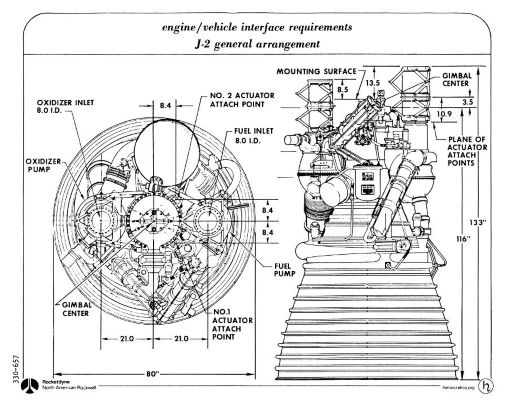
http://cgi.rumormillnews.com/pix0/J2_general_arrangements.jpg
- -
To view in new window, click:
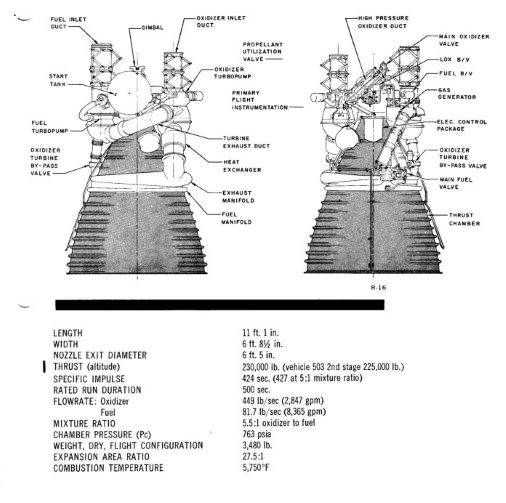
http://cgi.rumormillnews.com/pix0/J2_Fact_Sheet.jpg
- -
To view in new window, click:
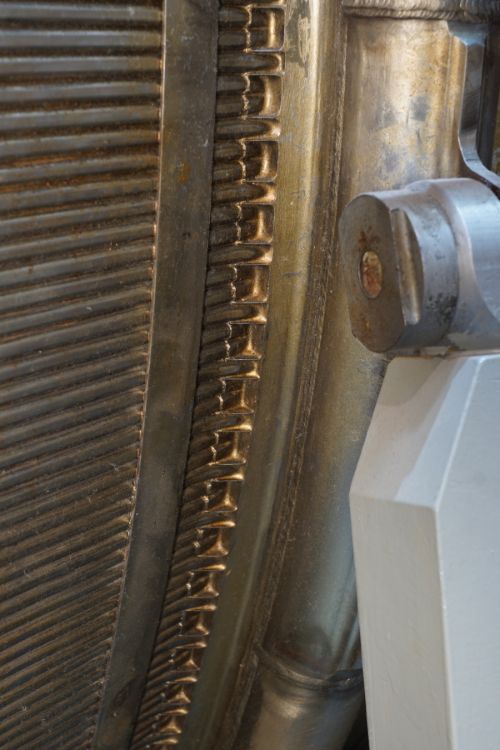
http://cgi.rumormillnews.com/pix0/Nozzle_Tubes_detail.jpg
- -
To view in new window, click:
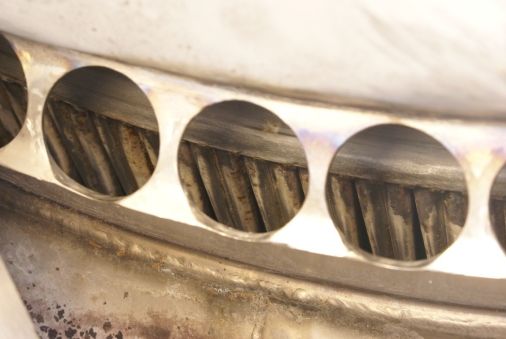
http://cgi.rumormillnews.com/pix0/J2_Nozzle_Cooling_Tubes_detail.jpg
- -
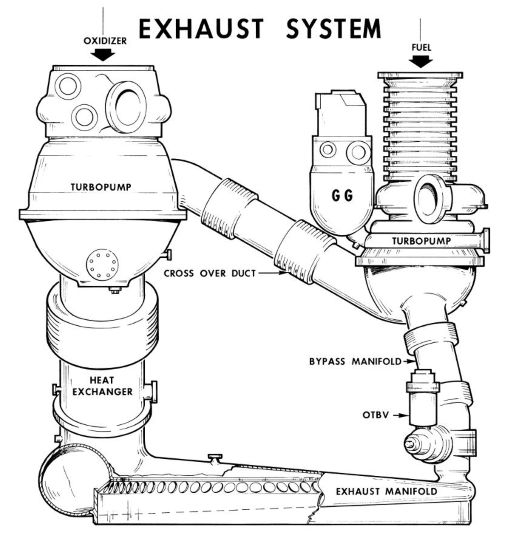
To view in new window, click:
http://cgi.rumormillnews.com/pix0/J2_Exhaust_System.jpg
- -
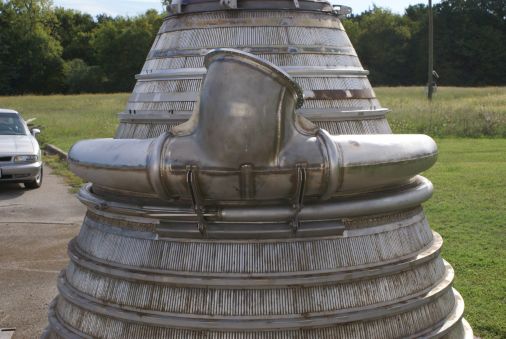
To view in new window, click:
http://cgi.rumormillnews.com/pix0/Exhaust_Manifold.jpg
- -
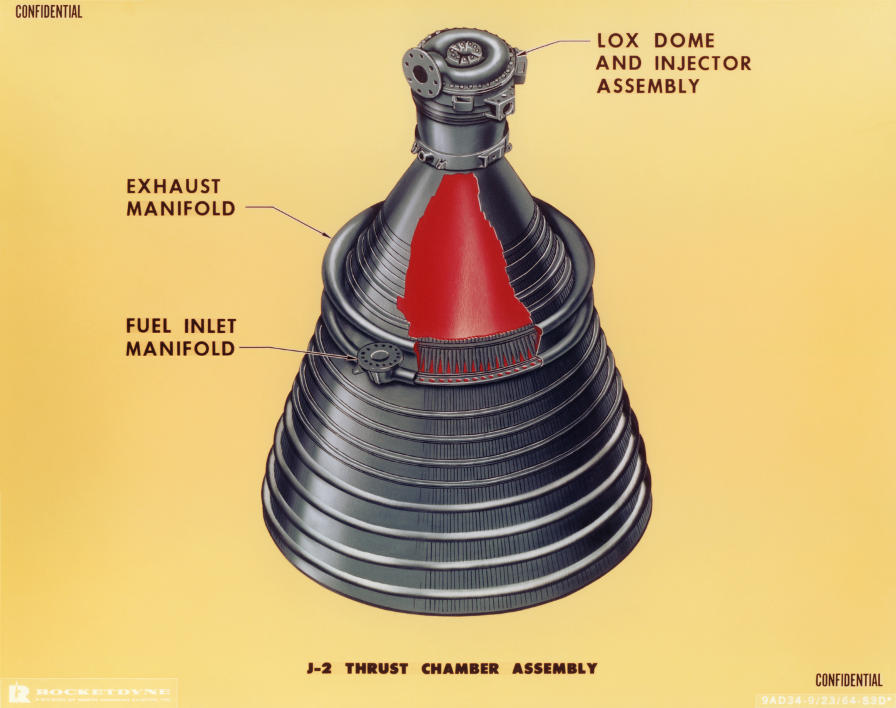
To view in new window, click:
http://cgi.rumormillnews.com/pix0/J2_Thrust_Chamber_Assembly_-_declassified.jpg
- -
To view in new window, click:
http://cgi.rumormillnews.com/pix0/Fuel_Turbopump.jpg
- -
To view now, click:
http://cgi.rumormillnews.com/pix0/Oxidizer_Turbopump.jpg
- -
To view now, click:
http://cgi.rumormillnews.com/pix0/Start_Tank.jpg
- -
To view now, click:
http://cgi.rumormillnews.com/pix0/J2_Test_Firing.jpg
- -
[2] https://en.wikipedia.org/wiki/Atlas_(rocket_family)
[3] https://yandex.com/search/?text=the+Atlas+Rocket+and+the+engine+it+used&lr=113563
https://en.namu.wiki/w/%EC%95%84%ED%8B%80%EB%9D%BC%EC%8A%A4%20%EB%A1%9C%EC%BC%93
[4] https://en.wikipedia.org/wiki/Liquid_nitrogen
[5] https://en.wikipedia.org/wiki/Liquid_oxygen
[6] https://en.wikipedia.org/wiki/Liquid_hydrogen
- - -