A post submitted by CGI member ScienceTruth.
*********************************
The Winnemucca Institute for Advanced Studies presents
How Stars Operate, and, Do They Age with Time
Part 2
Rotation of the Sun
The Sun revolves around its axis, like the Earth does. Solar features, like sunspot regions which are embedded in the Sun's atmosphere, follow with the rotation of the Sun. A sunspot region travels across the solar disk from east to west as seen from Earth. Sunspot regions need to be close to the central meridian, or solar equator, in order to be able to send a Coronal Mass Ejection toward Earth. It takes a sunspot region near the equator about 2 weeks to revolve from the east limb (edge) to the west limb (other edge). The further away (N or S) from the equator a sunspot region is, the longer it takes to rotate across the surface, or face of the Sun. This is because the Sun's atmosphere rotates faster at its equator than at its poles. The rotational period is approximately 25.6 days at the equator and 33.5 days at the poles. Viewed from Earth, as it orbits the Sun, the apparent rotational period of the Sun at its equator is about 28 days, this is due to Earth's coincident motion of travel in its own orbit around the Sun. Because the Sun's atmosphere is exceedingly deep (compared to Earth's) it can be driven by forces at different speeds in different latitude locations, like near the polar regions, and at the central equator region.
TRACE satellite photograph : a Solid Surface on the Sun
The Sun is definitely NOT just a giant ball of roiling gas
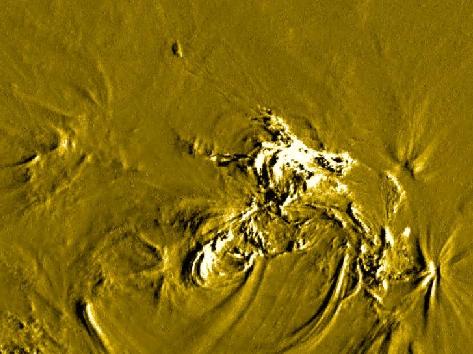
This TRACE Sun observing satellite photo shows Iron 9 (Fe9 or FeIX) a 9 electrons removed from the Iron atom by ionization, and its subsequent radiation wavelengths, radiating from a "solid surface" of the Sun just below the Photosphere.
We must examine the Sun again in the same wavelengths (and more) that TRACE performed. Because this data seriously falsifies the Standard Solar Model. And, because Science is all about Truth, this TRACE data must NOT be hidden nor suppressed. And, as Mainstream is 'vigorously defending' their Standard Solar Model against falsifying data, this means Mainstream is in serious danger of NOT pursuing the Truth, and that means They are Lying, and that is NOT doing Science, and that cannot stand. Thus, we definitely need to discover if these 'mountains' are still there, and still in the 'same description' in the big sense, and even in the smaller details sense. Wouldn't it be interesting if the above topographical structure is still basically the same now, as it was then, 25 years ago. That said, the Sun has very violent and extremely hot plasma 'winds' which may well 'erode the landscape', so we must discern what is really happening there. Because, our Mainstream's precious "Standard Solar Model of How Stars Operate and Age with Time" is a very seriously flawed theory, and one that was based on erroneous assumptions, and one which needs to be Corrected Immediately !
So, we are standing on the threshold of a major Scientific Revolution !!
Furthermore : Our Sun's last mini-nova event was 6,000 years ago, and that may well be when these 'mountain structures' on the "solid surface of the Sun" just below its Photosphere were formed, which would be very logical, and the interim hot plasma atmospheric winds have not had enough time to fully erode them, so they may have been much larger ! We need to re-image them and measure any changes since year 2000 when TRACE took the above photo.
TRACE : the Transition Region And Coronal Explorer satellite
Objective : Examine the three-dimensional magnetic structures that emerge through the Sun's Photosphere
TRACE was a satellite mission designed to deepen the understanding of our dynamic Sun’s activity, by exploring the connections between fine-scale magnetic fields and the associated grand-scale plasma structures on the Sun. TRACE imaged the magnetic structures which emerge from the Photosphere, and ultimately defined the geometry and dynamics of the upper solar atmosphere, that of the transition region and Corona. Images of solar plasma taken in wavelengths emitted or absorbed by atoms and ions formed in different temperature ranges allowed observation of magnetic field geometry. By linking fine-scale and large-scale structures, TRACE highlighted the effects of the Sun’s magnetic field on its own atmosphere.
Another major objective of the TRACE investigation was to explore the relation between diffusion of magnetic fields on the solar surface, and the resulting changes in heating and structure throughout the upper solar atmosphere. TRACE data allowed us to determine the rate at which magnetic topology changes, as well as the nature of local magnetic restructuring processes.
TRACE was the first mission to image an entire cycle of solar activity, studying the Sun at both its turbulent maximum and demure minimum in its sunspot cycle. The satellite observed some fine-scale structures for the first time as well, including coronal or solar 'moss', a sponge-like structure found at the base of some coronal loops. On June 21, 2010, TRACE took its last image, after millions of images before its last and 12th successful year in orbit.
TRACE Imaging Telescope : The telescope was of Cassegrain design, 1.6 m (5 ft 3 in) long with an aperture of 30 cm (12 in). The focal length was 8.66 m (28.4 ft). The field of view of the telescope was 8.5 x 8.5 arc-minutes with a spatial resolution of one arc-second. The light was focused on a 1024 x 1024 element CCD detector (0.5 arc-seconds/pixel). The temporal resolution of the instrument was less than 1 second, although the nominal temporal resolution was 5 seconds. Exposure times for observations ranged between 2 ms and 260 seconds. The primary and secondary mirrors had normal-incidence coatings specially designed for EUV and UV observations which divide the mirrors into quadrants. These segmented coatings were designed to provide identically sized and perfectly co-aligned images. Which mirror quadrant was used for an observation was determined by the position of a quadrant selector shutter mechanism, positioned behind the entrance aperture. Three of the mirror coatings provided for observations in specific Iron emission bands: Fe IX (central wavelength/bandwidth: 17.3 nm/0.64 nm); Fe XII (19.5 nm/0.65 nm); and Fe XV (28.4 nm/1.07 nm). The final mirror coating allowed broadband observations in the ultraviolet (centered on 500 nm). Further selection of observations in the UV could be made through the use of a filter wheel, mounted in front of the CCD. The filter wheel permitted continuum observations (170 nm/20 nm) as well as observations in emission bands for C (carbon) I and Fe II (160 nm/27.5 nm), C IV (155 nm/2 nm), and H (Hydrogen) I (Lyman-alpha) (121.6 nm/8.4 nm). The TRACE primary mirror assembly was based on primary mirror support assemblies used in SWATH, a small explorer developed for the U.S. Air Force, and NIXT, a set of rocket flights flown by the Smithsonian Astrophysical Observatory (SAO) five times between 1983 and 1993. Many of the designs and some of the space flight hardware from the MDI instrument on Solar and Heliospheric Observatory (SoHO) was also used. [7 d.]
Logical Train of Reasoning
for the Stellar Operational Functions and Mechanisms
that in Reality Actually Power Stars
From our investigations into the Ionization Potential (IP) of The Elements in "The Periodic Table of The Elements", or in most of them anyway, we now understand that the element of Iron, and the heavier elements (those having more protons, neutrons and electrons than the lighter elements) that Iron and the heavier elements have a very "Low Ionization Potential", meaning it only takes a Lower Voltage input to cause an electron to leave these atoms, whereas it takes a Higher Voltage input to cause an electron to leave the High Ionization Potential Elements, like Helium and Hydrogen and the Nobel gasses, which all have a High Ionization Potential rating (IP), as it is termed.
Now, because Iron has a Low IP, it ionizes easily, and that causes it to have an overall 'positive electric charge' from having lost one or several of its electrons, this is because electrons have a 'negative' electric charge, and if the Iron atom is losing 'negative electric charges' as electrons leave it, it therefore becomes more 'positive' in its overall electric charge, and this is what is termed an 'Anode' in electric engineering terminology. Whereas something that has an overall 'negative' electric charge is termed a 'Cathode'.
So, as the TRACE satellite "running difference photos" have shown, the lowest surface of the Sun that we have as yet detected and observed, is radiating in the Fe9 wavelengths, and this means that our lowest observed Surface of the Sun is very positive indeed ! , as the Iron there has lost 9 electrons !! and that makes it 9 times more positive in electric charge than when it had all of its electrons and was resting in its preferred 'neutral' or 'natural' or 'ground' state, with all of its normal electrons. That's a strong positive electric charge difference, and this makes the Sun an Anode, and is why it generates a very powerful Electric Field around itself, an Electric Field that reaches all the way to the Sun's Heliospause, which is about 14 Billion miles away, 4 times the distance of Pluto.
This is Why the Sun, or a Star, attracts electrons from the InterStellar Medium (ISM), that part of outer space that is just beyond the Sun's Heliopause, because the Sun is a very strong positive Anode, and has a very strong Electric Field around itself, and the ISM electrons in the 'Electron Drift' in the ISM that are passing by our Sun's Heliopause have a negative electric charge, this is why they are attracted to our Sun's strong positive electric field. This is How and Where our Sun and a Star gets the energy that it uses to 'shine', it is from the Electron Drift in the ISM that is 'passing by' ! And NOT from a central stellar core engaged in a 'growing cascade' of atom-building fusion reactions.
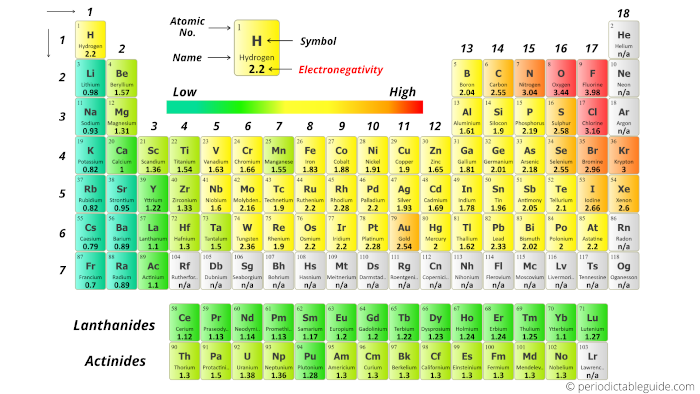
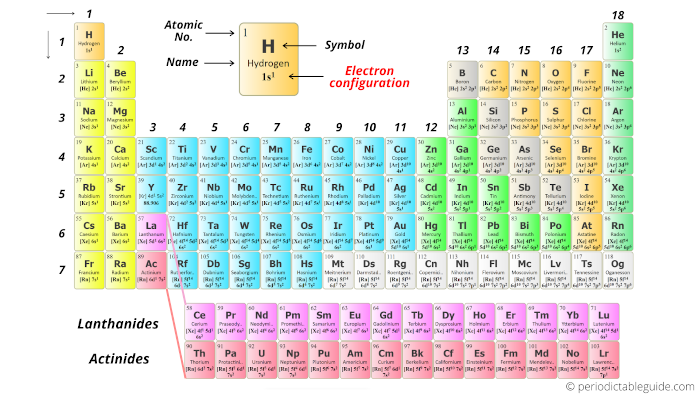
Conclusion
The implications of the TRACE running difference photos in the Fe9 wavelengths prove that the Sun is a very positive Anode in the overall Galactic Electric Circuit. And this is Why and How our Sun, and all Stars Operate. They get their energy input from the ISM 'electron drift', the InterStellar Medium's Electron Drift, a motion of electrons moving past the Sun's Heliosphere, and all Star's Heliosphere's, moving at about 50 meters per second in this location, as the Voyager Spacecraft is considered to have documented with its instruments. The very positive Anode of the Sun, and all Stars, creates their surrounding Electric Field, and this attracts the Electrons in the ISM's Galactic Electron Drift that are moving past the Heliosphere, and these electrons make their way toward and into the Sun and Stars, and this is Why the Photosphere is so bright in its visible light and other wavelengths of energy radiations, because the 'flux' or 'amperage' of the current flow into the Sun is so dynamic in its action that the current flow is in the 'Arc Mode' of transmission when it gets into the Sun's Photosphere.
When the Electron Drift is in the ISM, and when it is moving toward the Sun and Stars after passing thru their Heliopause, it is in the 'Dark Mode' and is not causing a radiation output in a wavelength we can see, or as yet detect with our present Earth based instruments. When it gets near the Sun and a Star's 'Corona atmosphere' it transfers some of its energy to the atoms in the Corona and begins to cause a radiation output in the 'Glow Mode', and we can best see its' glow when the Moon eclipses the Sun, and the Corona suddenly becomes visible. This is the Glow Mode of the electrons state of arrival, but when this 'current flow' gets to the thicker lower atmosphere of the Sun and Stars, it is so 'condensed' or 'crowded together' in the electrons arrival, they cause the atmospheric plasma of the Photosphere's atoms to go into the 'Arc Mode' of 'energy transmission from their energetic collisions with the Photosphere's constituent particles, and this makes the Photosphere radiate vast amounts of energy in multiple wavelengths, and this is How we can now see the Sun and Stars 'shine' very brightly indeed in their 'Arc Mode' reception of the arriving ISM electron energy.
What needs to be done is to do more TRACE type "running difference wavelengths photography" of the Sun and the very closest Stars to learn more about what is actually going on there in their atomic and electric actions. Because, the implications of the TRACE photos in Fe9 strongly imply, yea prove, that our Sun and all Stars are mostly a big ball of Low IP Iron and perhaps other heavier elements as their main constituents deeper down below the Photosphere and in their lower 'core', AND that stars are NOT a giant ball of high IP Hydrogen in the core that is fusing into higher IP Helium, and then into Carbon and Oxygen and Silicone, etc etc in a 'fusion reaction cascade' of creating heavier elements. The Sun and Stars are in Truth, a big ball of Low IP Iron that creates a very Positive Anode, which then creates a powerful Electric Field around itself, which then attracts the ISM Electron Drift to arrive in upon itself, and that is Where a Star's energy comes from, and is What makes the Corona 'Glow' in Glow Mode, and its Photosphere exuberantly 'Shine' in Arc Mode.
This Theory of how Stars shine and Where their Energy comes from, makes the most and best sense of things, and it is supported by Real Data ; from TRACE, the Voyager Spacecraft, and our understandings of the IP of The Elements, and of how Electric Currents and Electric Fields all behave and operate. This is the Real Science Truth of How Stars Operate !
As further supporting evidence : The Photoelectric Effect, as discovered and investigated by Philipp Lenard in the 1890's, has shown that when an Ultraviolet wavelength of light is directed upon a metal plate, it will induce a small electric current in that metal plate ! This indicates that 'UV light' can be converted into 'electricity', provided a suitable 'substance' is available. Could this conversion of 'light' into 'electric current' also happen in outer space ? This avenue also needs to be pursued so as to determine if this 'mechanism' could be partly responsible for the existence of 'large scale magnetic fields' in nebular clouds of matter in deep space.
Discussion
The Stellar Nuclear Furnace Theory was a very good idea, especially after the atom bomb was detonated and succeeded in its Theory of Operation, but as for explaining how a Star could have that much energy to expel on a constant basis, is unfortunately completely wrong, and Real Data has shown it is wrong. So we MUST learn from our mistakes, and live in the REAL WORLD. And the Real World is, that Stars and our Sun get their overwhelmingly main energy supply from the ISM Electron Drift, no matter that we don't understand why the ISM Electron Drift exists. It does Exist, and it is What powers our Sun and Stars.
" Hydrogen has only one proton and one electron, and thus it is the most abundant element in the Universe. After Hydrogen, Helium is the most abundant element in the Universe. In fact, Hydrogen and Helium combined make up more than 99% of all visible matter in the Universe. Less than 1% of all that we can see is composed of everything heavier than Helium. The ten most common elements in the Universe are Hydrogen, Helium, Oxygen, Carbon, Neon, Iron, Nitrogen, Silicon, Magnesium, and Sulfur. It may seem strange that some lighter elements, such as Lithium and Beryllium, are not in the top ten. Despite some elements being lighter and simpler than those listed, they are not nearly as common. "
[ The above quote is according to Mainstream. Also the lack of Lithium detected is a big problem for the Big Bang Theory ! , and is termed "the Lithium Abundance Problem" ]
Regarding Electron Drift
The 'drift' speed of electrons is generally in the order of 10^-3 meters per second in conducting materials here on Earth.
Net velocity of the electrons
Every material above absolute zero temperature which can conduct electric energy, like metals, will have some free electrons moving at random velocity within them. When an electric potential is applied into a conductor, the electrons will tend to move towards the positive potential, but as they move, they will collide with atoms and will bounce back and lose some of their forward motion energy. However, due to the continuing electric field, the electrons will accelerate back again, and these random collisions will keep happening, but as the acceleration is always in the same direction due to the electric field, the net velocity of the electrons will also be in the same direction as the field.
Relation between Drift Velocity and Electric Current
Mobility is always a positive quantity and depends on the nature of the charge carrier, the drift velocity of an electron is very small, usually on the order of 10^-3 m/s. Hence, at this velocity it will take approximately 17 minutes for electrons to pass through a conductor of one meter in length. Surprisingly, when we turn on electric appliances in our home the electric energy arrives at the appliance at virtually 'the speed of light', this is because the velocity of the electric current of energy is not a one-to-one function of the drift velocity of the individual electrons in the conductor, but is more the same as the speed of light.
" As soon as the electric field is established the current starts flowing inside the conductor at the speed of light and not at the speed at which the electrons are drifting, hence there is a negligibly small delay between an input and an output in turning on an electric light. "
Relation between Drift Velocity and Current Density
We can define 'current density' as the 'total amount of current' passing through a 'unit cross-sectional' conductor in 'unit time'. From drift velocity, we know the formula for drift velocity as:
I = nAvQ
J = I/A = nVQ
Where,
J is the current density measured in Amperes per square meter
v is the drift velocity of the electrons
Thus, we can say that the drift velocity of the electrons and their current density are directly proportional to each other. Also, when the electric field intensity increases, the drift velocity increases and the current flowing through the conductor also increases.
What is the formula to find the drift velocity ?
The formula is,
I = nAvQ
v = I / nAQ
Here,
I – the current flowing through the conductor
n – the number of electrons
A – the area of the cross-section of the conductor
v – the drift velocity of the electrons
Q – the charge of an electron
What are the characteristics of drift velocity ?
Drift velocity is directly proportional to current.
When an electric field is exerted over a conductor, the electrons jump towards the high potential terminal of the given wire.
Unless an electric field is offered to the conductor, the internal electrons move at arbitrary velocities and directions.
The current moving inside a conductor is directly proportional to the electrons’ drift velocity. [8]
Electric Current and Drift Velocity
The current is directly proportional to the drift velocity. The average velocity of a particle is its drift velocity. The velocity of drift is proportional to the current.
The average velocity particles attained in a given material are caused by the applied electric field. When an electric field is present, electrons begin to move from the negative end to the positive end. The velocity with which the electrons travel is referred to as drift velocity. An electric field adds a little net stream to this arbitrary electron movement; this is the drift velocity. The velocity of drift is proportional to the current. It is likewise relative to the extent of an outer electric field in resistive material.
The simple formula is vd = μE.
Drift Velocity of the Electron
Free electrons move at a net speed, known as drift velocity, when a conductor is connected to a battery. As a result, when we turn on the light, it is not the actual displacement of an electron from the switch to the bulb that causes it to glow. When all electrons begin to drift in the same direction, the current is said to have formed. Current energy travels at the speed of light. As a result, despite the low value of the electron drift velocity in the conducting medium, the bulb glows immediately when the switch is turned on. [9]
[ This is a very interesting situation, because 'electric energy' is completely different from the 'electron itself ', in a way. And which is why in the Paper, "Energy: The Four States of its Manifestation" ; " #3. The Electrical State – The electric energy that is present in Matter " , is regarded as a separate 'State of Energy' in and of itself, and not a collateral sub-part of the " #2. The Special State called Matter ", even though The Electrical State is completely dependent upon Matter for its habitation abilities and its transmission abilities.
Because, 'electricity' will NOT 'habitate in-vacuum' nor 'transmit' in a vacuum, unless it has some Matter 'on the other side of the vacuum' in which to 'land' and then 'habitate within' ! It must have some Matter in which to arrive into if it is to 'jump across' a vacuum. This is most likely why Mainstream Science, early on, declared "there is no electricity in space", because electricity will not travel in a vacuum unless it has some Matter existing on the far side of its 'travel' or 'jump', upon which to 'land'. However, what Mainstream did not well understand, in the past, was that 'space' is teeming with all kinds of 'particles of Matter' !! , as the "Interstellar Grains" section further down herein discusses, and which would provide the 'transmitting medium' that Electricity would require for transmission, and this is how large scale Magnetic Fields are able to arise, and sustain, in nebular clouds and other places, as an electric current is the only way to create a magnetic field, and so thusly electric currents must exist in space, as we have excellent proof of large scale magnetic fields in space, and the Interstellar Dust Grains would provide the required 'medium' for those 'currents' to travel thru and create the magnetic fields we detect, and to sustain those large scale magnetic fields. Mainstream's idea of "frozen-in magnetic fields" in space is an erroneous assumption of a theory to try and support their contention that "there is no electricity in space". ]
The Interstellar Medium
Thus, in the Interstellar Medium, or in the Sun's Heliosphere, when an Electric Field is present, it will influence any electrons, and cause them to 'desire' to move towards a 'positive' electric charge potential in that 'field'. The electron's motion velocity, its 'drift', is proportional to the field's charge potential present upon them, and as there is no 'wire' for the ISM electron drift to be 'contained within', the electrons all move at the 'drift velocity' that the field 'requests' of them. As the Sun's field potential way out near the Heliopause is very diminished from what it is when in the inner solar system, any electrons will experience a weak 'attraction' compared to when they are inside the orbit of Mercury. This would indicate any electrons beyond the Sun's Heliopause would be in a fairly 'lackadaisical' direction of motion as they approach from a further distance, but when close to the Heliopause they would definitely feel the growing strength of the Sun's Electric Field attraction power.
In Addition, and in conjunction with, Stars being powered by the ISM Electron Drift . . a Neutron will devolve into a hydrogen atom in about 12 to 14 minutes when NOT in the confines of an atom's nucleus ! , according to numerous particle accelerator and etc experiments and theoretical work. And, as a Neutron is the 'accommodative synergistic combination' of an Electron and a Proton ! And as a hydrogen atom is simply a Proton and an Electron ! and when a Neutron morphs into a hydrogen atom from when in solitude for some minutes, it 'demands' or 'requires' a 10^15th power 'more spacial volume' than when it was a Neutron, for when it becomes a hydrogen atom again !
And thusly, Oliver K. Manuel developed a Theory that "Neutron Repulsion" is also what 'powers stars' ! in that, as neutrons manage to 'escape' atomic nuclei from areas further below the surface, this process allows electrons and protons to 'migrate upward' and 'outward' from a Star ! , and it is these 'nucleus escaping neutrons' who partly supply the Solar Wind due to their 'escaping' a nucleus, and because of this 'neutron action' Star's are 'slowly evaporating' !
Max Planck Institute Lecture
slide show - 129 pages
[ for insight see page 125 ]
Portions from various pages of the slide show follow below :
motion of ions and electrons coupled via collisions;
small drift speed for keeping up B-field, extremely low !
Magnetic Reynolds number :
vB/L vL
Rm = nm B/L^2 = nm
Rm>> 1: advection term dominates
Rm<< 1: diffusion term dominates
cf. analogy to laminar and turbulent motions !
If all CRs (Cosmic Rays) were extragalactic, an extremely high energy production rate would be necessary (more than AGN and radio galaxies could produce) to sustain high CR background radiation.
Assuming energy equipartion between B-field and CRs radio continuum observations of starburst galaxy M82
give : e cr (M82) ~ 100e cr (Galaxy)
CR production rate proportional to star formation rate
no constant high background level !
CR interact strongly with B-field and thermal gas
•About >50% of Galactic SNe occur in clusters [10]
[ Sne - Super Novae (Nova's) ; B-field is the Magnetic Field in 'abbreviation convention' ]
" In different astrophysical environments, inelastic collisions with H2, with H and/or with electrons can be important or even dominant in determining the equilibrium populations in the various rovibrational states of an interstellar hydride. Collisions with He can also be important but probably never play a dominant role. In dense, well-shielded molecular clouds, H2 is the most important collision partner, but in photodissociation regions where the carbon is significantly photoionized, excitation by electrons can be important or dominant. While the electron abundance in such regions is only ~ few × 10 ^-4 relative to H2, the rate coefficients for electron impact excitation can exceed those for excitation by H2 or H by four orders of magnitude, particularly in the case of hydride cations or neutral hydrides with large dipole moments: here, the cross-sections are enhanced by long-range Coulomb interactions (and the mean electron velocities exceed the mean H2 velocities by the square root of the H2 to electron mass ratio). In certain environments, and in particular the molecule reformation region behind dissociative shock fronts, excitation by atomic hydrogen can also be very important. " [11]
[H2 is diatomic hydrogen , He is Helium ]
INTERSTELLAR GRAINS
Observational Evidence: Summary
There are many different astronomical phenomena which both reveal the existence of interstellar dust grains, and provide information allowing us to infer the properties of this dust. Some of the information is quite direct, due to absorption, scattering, or emission of light by the grains:
* Wavelength-dependent extinction - attenuation and "reddening" of the light from distant stars due to intervening dust.
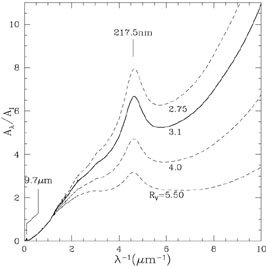
Figure 1. Wavelength-dependent extinction, normalized to the extinction at I = 900 nm, for different types of clouds, identified by the value of RV ident AV/(AB - AV), where V = 550 nm and B = 440 nm. The average extinction for diffuse clouds is characterized by RV approx 3.1. Dense gas near the surfaces of molecular clouds can have RV as large as 5.5. The extinction at I is approximately proportional to NH = N(H) + 2N(H2) + N(H+), with AI / NH approx 2.6 × 10⁻²⁶ m2 / H.
Spectroscopic features in the extinction. There are a number of extinction features, including:
* A strong and very broad extinction "bump" at 217.5nm (see Figure 1), probably due to carbonaceous material, perhaps graphite.
* Infrared extinction features at 9.7µm and 18µm, almost certainly due to silicates.
* A number of weaker "diffuse interstellar bands" (see Figure 2), the strongest of which are at 443 nm and 578 nm, and which remain generally unidentified.
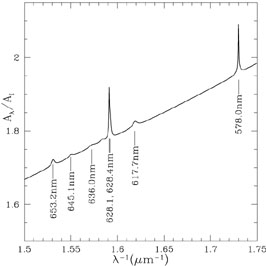
Figure 2. A portion of the extinction curve showing some of the "diffuse interstellar band" extinction features, labelled with their respective wavelengths. These diffuse bands may be due to impurities in grains, or to "free-flying" large molecules / ultrasmall grains.
* An absorption feature at 3.4 µm, seen in diffuse clouds, presumably due to the C-H stretching mode in aliphatic hydrocarbons.
* A number of absorption features, seen only in molecular clouds, due to ice mantles which apparently coat the grains in these regions. The strongest such feature is a 3.1µm feature attributed to H2O ice. [12]
[ H20 = water , C-H = Carbon Hydrogen or a hydrocarbon molecule or H-C 'chain' molecule possibly ]
The above 'evidence' of 'dust' and etc in the ISM lends excessive credence to the 'electron drift' basis for electrons in the ISM. Which is why it is included herein.
Do Stars Age with Time
Do Stars Age with Time ? Well, as Oliver K. Manuel is in essence very correct, Stars do 'evaporate', albeit very slowly as they lose neutrons into the Solar Wind. And neutrons might be difficult to 'replace', although they are just protons and electrons existing in a 'cohabitative synergy', so that calculation could be very problematic in getting it correct for : 'How long DO stars live' from when they are 'born' in a Birkeland Current Z-Pinch (BC-ZP) , to when they finally evaporate, or devolve into 'brown dwarf ' stars, and 'fade away'.
In the Electric Interpretation of How Stars Operate and Age with Time, stars do NOT "all die in a supernova ending", as Mainstream likes to imagine. Stars may well 'evaporate slowly' and become lesser in size and brightness, and eventually become a chunk of 'quiet matter floating around out there'. Sure wouldn't want to run into one of them with my spaceship. And thus, Stars don't die "in a blaze of glory", they "fade away in a whimper, and not with a bang". So sad, but much more than likely true. Although their 'birth' in a BC-ZP is very exciting !
Addendum
We need to further re-investigate the TRACE satellite findings, to definitively confirm them, and that shouldn't be too difficult. And then work to discover what event or process made those 'mountains' on the Sun's Iron Surface ! Was it a large 'explosion' or 'ejection' and this surface topography is the remanent ? and was this event what 'blew away' the atmosphere of Mars very long ago ?, and did Jupiter and Saturn end up with most of Mars' losses ? Then there is the 'Asteroid Belt' ! Did this solar event cause the destruction of the 'planet' that is what the Asteroid Belt was made from ? Is there an estimate for the total volume or mass of the Asteroid Belt ? and if so, what size planet would it have been ? and how much additional material was 'lost' in its destruction ? and did Jupiter and Saturn accumulate some of that too ? as that would have made the missing planet even larger. At the Asteroid Belt's distance, that would make it 'colder' than Mars but warmer than Jupiter.
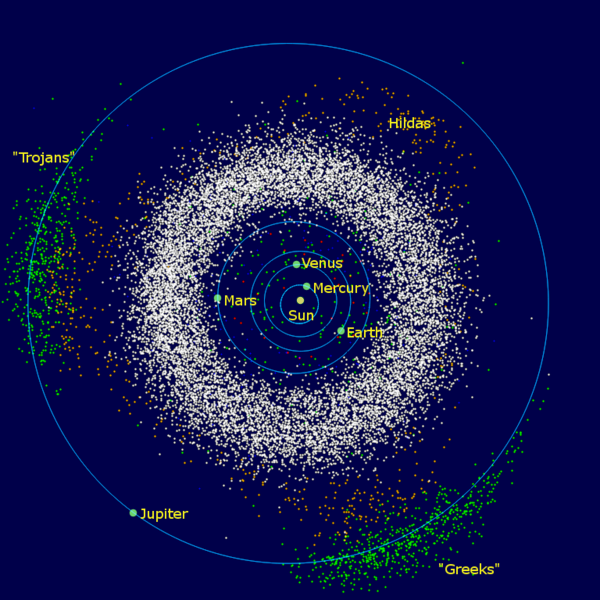
It does appear that the 'Trojans', 'Hildas', and 'Greeks' (who some call 'Trojans'), are at Lagrange points in the orbit of Jupiter, which would make sense gravitationally.
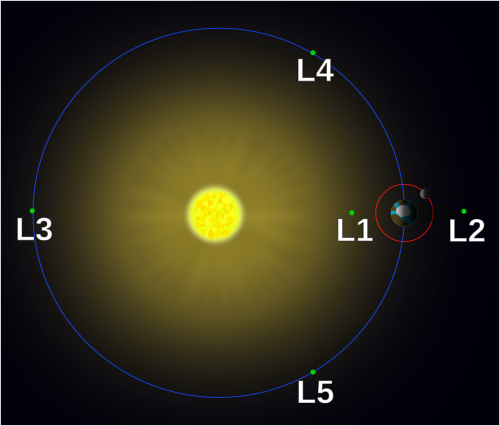
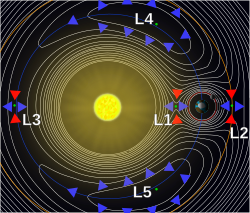
Lagrange points in the Sun–Earth system (not to scale). This view is from the north, such that Earth's orbit is counterclockwise.
In general this would be the same 'map' for Jupiter as well, in that the 5 'Points' diagrammed here correspond to the Jovian Asteroid group's locations, L3, L4, L5.
How many asteroids are there in the asteroid belt ?
According to the ESA, the asteroid belt contains between 1 and 2 Million asteroids larger than one kilometer in diameter. Plus, there are millions of smaller space rocks. As of April 2022, astronomers discovered and numbered 598,053 asteroids. They consist primarily of C-type or carbonaceous asteroids. The other common types are S-type or silicate asteroids and M-type or metallic asteroids. Only about 30 asteroids are larger than 200 km (124 mi) in diameter. The largest objects in the asteroid belt are Ceres (940 km or 580 mi), Vesta (525 km or 325 mi), Pallas (510 km or 320 mi), and Hygiea (410 km or 250 mi). These four celestial bodies make up about half of the total mass of the entire asteroid belt. It’s important to note that Ceres is now considered a dwarf planet, which makes Vesta the largest official asteroid in the belt.
Despite the immense size of the Asteroid Belt, its mass is actually very small. Although the Asteroid Belt contains millions of asteroids, all of it adds up to only about 3% the mass of Earth’s Moon. If you were to combine every asteroid into a single object, it would be tiny compared to the Moon. In fact, over 60% of the total mass in the Asteroid Belt is contained within just four objects, Ceres, Vesta, Pallas, and Hygiea. Nearly 40% of the mass is contained within Ceres alone, making it the largest object in the Asteroid Belt and the only dwarf planet located in the inner solar system.
While sci-fi movies and films have popularized the idea that traveling through our asteroid belt is exceedingly dangerous, this is not actually the case. It is so huge the average spacing between two asteroids is about 1 Million km (620,000 mi) ! In fact, every spacecraft that has traveled beyond Mars has traversed the Asteroid Belt with no issue. While works of sci-fi make it appear as though collisions with asteroids are a real danger, the actual distances between individual asteroids is so vast that a collision is more than exceedingly unlikely. In fact, if you were to stand on an asteroid within the Asteroid Belt, you would not be able to identify even the closest asteroids, other than the 4 largest ones, and that's if they were somewhat close. Their distance would make them look no different from the distant stars.
[ So, the Asteroid Belt may have been from a 'collision' of two small Moons ? or something like that, as its Total Mass seems to be very low. Much lower than I expected. And, some of the 'mass' might well have 'been lost' before present day accounting. In any event, it's an interesting 'structure' in our solar system. ]
Extra Credit to Ponder
I do agree with Oliver Manuel, that the Isotope variations in meteorites do tell us something very significant ! , as compared to Earthly compositional constituent elements.
And also, that our Sun has done some sort of nova in the past ! , and that this event is responsible for various 'evidence' and 'data' involved with our present day "material isotopes present" in the earthly meteorites situation.
I also agree, his idea of 'Neutron Repulsion' has merit that Mainstream has not understood. And we need to examine what implications Neutron Repulsion might have using today's technology ! Because, what Michael Mozina found in the TRACE running difference photos, to the chagrin of Mainstream, needs to be thoroughly investigated !! and not ignored as Mainstream is attempting to do !
I also agree with Oliver that our Sun must have done a "major nova event" to produce the isotope elements we do find in meteorites, because the 'travel time' from far away supernova's would be so long, the isotopes would not be in the 'structural condition' they are in now, as so much time will have passed their 'isotope configuration' will have changed. So our solar system could well have been the result of a much-bigger-than a mini-nova by our Sun in the extremely distant past and is what produced those exotic isotopes we have found.
But for the last 60,000 years, we have documented our Sun has been doing a Mini-Nova Event every 6,000 years, and almost 'like clockwork' !! And a "mini-nova" event is one that does not 'destroy' the Earth or Solar System, or re-create the solar system again, but one that causes extreme 'stress' to all the 'living systems' on the Earth, but does not 'sterilize' the Earth of its biological entities, but it does have great power and results in the 'extinctions' of many 'species' in both plant life and animal life, and also results in human culture extinctions at times as well (like the Neanderthals, perhaps), but not a total human extinction, as many humans 'went underground' for however long it took for them to then be able to "safely return to the surface" and re-start civilization. And this is why our only 'history' of this "Earth Magnetic-Field Reversal Event" in conjunction with a "Sun Mini-Nova Event", that we do have, are Oral Histories of "fire from the sky, earthquakes and volcanoes on an unprecedented scale, and darkness for days on end", because this IS what happened during these Earth Magnetic-Field Reversal Events that coincide with our Sun doing a Mini-Nova Event ! What we don't know is : How long do we need to 'stay underground' until it is safe to return to the surface !
From the past we only have 'oral histories' of what happened, but this time we'll have 'video' !
And since the last 'event' was 6,000 years ago, and they happen every 6,000 years !!! we are right on the cusp of the next one !!!
- -
Oliver K. Manuel
"An iconoclastic theory of the solar system's origin shows how science tests its truisms"
by Solana Pyne
Discover Magazine
March 2002
In the late 1960s, chemist Oliver K. Manuel made a small but staggering discovery about meteorites. He noticed that the abundances of certain elements in meteorites were distinctly different from those in the Earth and much of the solar system. This observation spurred research showing that our solar system probably formed from material generated in many different stars. For Manuel, it also spawned a radical theory about the origins of our solar system, which he has doggedly pursued for forty years. Nearly all astronomers agree that the Sun and the rest of the planets formed from an amorphous cloud of gas and dust 4.6 Billion years ago. But Manuel argues, based on his compositional data, that the solar system was created by a dramatic stellar explosion--a smaller in size supernova--and that the iron-encased remnant of the progenitor star still sits at the center of the Sun. Manuel fits a popular stereotype, the lone dissenter promoting a new idea that flies in the face of the scientific establishment. In the real world, some of these theories eventually have been proven right, but vastly more have been proven wrong. Manuel is under no illusions about the popularity of his idea. "Ninety-nine percent of the field will tell you it's junk science", he says. The evidence weighs in heavily against him. If he's right, however, we need to completely rethink how planetary systems form. Even if he's wrong, some scientists say, at least he has made people think. Astrophysicists don't deny the validity of Manuel's original meteorite data. "It was a good observation", says cosmochemist Frank Podosek of Washington University. "This was something we hadn't observed before. It was a fruitful thing to notice, but he picked it up and ran with it very much farther than the basis could justify." To support his theory, Manuel pieced together bits of information from history, astronomy, biology and physics. He founded his theory on isotopes, variants of an element that have different atomic weights but the same basic chemical properties. On Earth, isotopes have consistent, well-known relative abundances. Manuel cited unusual mixes of isotopes in meteorites and possibly in the atmosphere of Jupiter as evidence that those objects formed from the outer layers of a supernova, where such strange isotope ratios would be the norm. The inner planets, made from rocky debris, formed from heavy elements in the inner part of the supernova, he says, where more familiar isotope concentrations prevailed. And the Sun, which Manuel argues is iron-rich, formed around a neutron star, the collapsed remnant of the exploded star. "This is not a news flash", he says. "This is my conclusion from 42 years of measuring the abundance of isotopes." Manuel's insistence both infuriates and amuses others in the field. Scientists who know him talk about him in a tone that is both weary and indulgent, as they would describe an eccentric relative. "I happen to like Oliver", says Donald Burnett, Professor of Geochemistry at the California Institute of Technology. "I don't agree with anything he says, but I find him a colorful character." There is one widely accepted element in Manuel's scenario. In the universe, many elements heavier than iron are thought to have been forged in supernovae. But the evidence increasingly seems to rule out Manuel's supernova-genesis theory. At the start of the 20th century, many scientists believed the Sun was made mostly of iron. Manuel cites the historical support for an iron-rich Sun as evidence for his theory. "A high iron content for the Sun is not revolutionary but is actually quite compatible with the history of solar research", he says. But in 1925, astronomer Cecelia Payne analyzed the light of our star and proposed that the Sun was most likely a burning ball of hydrogen. By the late thirties, the case was nearly settled. The surface of the Sun has been proven to be mostly hydrogen, and many subsequent studies have led to extremely detailed models of the hydrogen fusion reactions that power our star. "We can make an explicit model of the Sun, putting its mass and brightness into the computer, along with the laws of physics and that then produces right amount of Sunshine and brightness", says Sallie Baliunas, an astrophysicist at the Harvard-Smithsonian Center for Astrophysics. These models also explain the various stages of stellar evolution that astronomers can observe. And the principles of hydrogen fusion are well established, both in the laboratory and in the detonations of hydrogen bombs. According to theory and experiment, light hydrogen atoms in the Sun fuse together to form helium atoms, releasing bursts of energy in the process. All of the evidence points to our Sun being made primarily of hydrogen. Manuel argues that the surface is made up mostly of hydrogen only because elements in the Sun separate according to mass. Hydrogen, the lightest element, floats to the surface, while heavier elements huddle below. But his theory creates another problem: If the Sun isn't made of hydrogen, how does it generate its energy ? Fusing a heavy and stable element like iron consumes more energy than it releases. In his theory, Manuel relies on the neutron star at the center to make up for energy lost when hydrogen is taken out of the picture. The neutrons that make up the star have higher energy than free neutrons, he says, so a neutron escaping from the star releases energy. The free neutron then decays into a proton as it migrates toward the surface, again releasing energy. The proton, which is a hydrogen atom minus an electron, fuses to form helium and releases even more energy. He supposes that some of the decayed neutrons stick around as protons and account for the abundance of hydrogen on the surface of the Sun and in the solar wind. Manuel's colleagues are skeptical about this elaborate and unproven explanation. Many scientists also find it improbable that our solar system could have formed quickly from the debris of a supernova. They have only found one system in which planets formed around a neutron star, and it looks nothing like our solar system. On the other hand, astronomers have spotted innumerable stars forming out of clouds of gas and dust and find strong indications that planets are forming around these protostars. Finally, there is persuasive evidence that our solar system contains the remains of many different supernovae. Ironically, Manuel's own discovery contributed to this understanding. Chemists have traced the strange isotopic concentrations Manuel first observed to individual grains within meteorites. The proportions of each isotope vary from grain to grain. If the solar system formed from a single supernova, all the grains should have roughly the same abundances of isotopes. Since they don't, most scientists view the isotopes in a particular grain as a clue to its origin, and, hence, as evidence that meteorites, and most other bodies in the solar system, are made of heterogeneous material derived from many stars. That makes Manuel's theory look less likely than ever. "Fifteen years ago, I would have kept a question mark in my mind", said cosmochemist Roy Lewis, of the Fermi Institute at the University of Chicago. "I would have said well he's almost certainly wrong but by golly if he turns out to be right, won't that be interesting." Although most scientists don't believe Manuel's theory, they all acknowledge that outlandish hypotheses have been proven correct in the past. It seems especially unlikely in Manuel's case, however. In addition to citing the contradictory evidence, many scientists also dismiss the Iron-Sun Theory on the grounds of simplicity. Most observations of our solar system can be explained by fairly common processes, so why evoke rare and complicated explanations ? Still, some scientists see fringe theorists like Manuel as an asset, as they make people reassess long-held theories. "Manuel is a little off the wall", Lewis says. "But science is filled with people a little off the wall. Our great strength is to allow them to express their views." Manuel's views got an airing again at the January meeting of the American Astronomical Society meeting in Washington, DC, where once again they received little notice. Meanwhile, Manuel continues to argue his theory with an air of implacable certainty, believing that solar physics is on the verge of a revolution. He talks as though scientists need only to come to their senses and reassess the data. "I'm not trying to refute the professional careers of the scientists whose shoulders I'm standing on", Manuel says. "My work depends on their evidence. It's just a different interpretation."
How our Sun is 'prompted' to make a "mini nova"
This, the 48 minute video, explains it BEST !!! It includes his 'best' video about 1/2 way through, which is only 7 or 8 minutes long, and is really good !!! it has the best narration and a great well written and succinct script.
Earth's Disaster Cycle - The Catastrophe Evidence: (the 48 minute video)
https://www.youtube.com/watch?v=-sGPCMIQZLw
I only have the GoogleTube video with irritating ads, so if you can 'make a copy' of it, edit out the ads !!!
- -
Here is a 13:48 minute video about How and Why our Sun keeps having a recurring micro-nova event.
This validates to a very large extent what Oliver Manuel was saying !!!
Tho, not to the energetic extent he was theorizing, a Micro Nova event, not a Supernova event like he supposed, but in his 'defense' that was for the initial origination of our solar system ! Since then we've had mini-nova events on a fairly consistent 6,000 year cycle basis, and for the last 60,000 years too ! And we've been able to document Ten of them so far ! and they occur right on the 6,000 year time span.
https://www.rumormillnews.com/cgi-bin/forum.cgi?read=258993
no ads in the link above,
but lots of ads on GoogleTube link below,
https://www.youtube.com/watch?v=-NcrBues58g
- - [ more videos on this Earth Magnetic Field Reversal Event that keeps happening every 6,000 years ]
6:02 minute video
https://www.rumormillnews.com/cgi-bin/forum.cgi?read=249675
- - -
3:48 minute video on the Earth Magnetic Pole Shift
https://www.rumormillnews.com/cgi-bin/forum.cgi?read=247424
- - -
8:50 minutes video
https://www.rumormillnews.com/cgi-bin/forum.cgi?read=243414
or on
https://www.youtube.com/watch?v=-sGPCMIQZLw
- -
References for Part 2
1. https://periodictableguide.com/wp-content/uploads/2021/04/periodic-table-with-electronegativity-labeled.png
2. https://periodictableguide.com/wp-content/uploads/2021/04/Periodic-table-with-electron-configuration.png
3. Griffiths, David (1999). Introduction to Electrodynamics (3 ed.). Upper Saddle River, NJ: Prentice-Hall. p. 289. ISBN 9780138053260.
4. https://en.wikipedia.org/wiki/Asteroid_belt
5. https://en.wikipedia.org/wiki/Lagrange_point
6. https://apod.nasa.gov/apod/ap240723.html Crab Nebula , M1
7. https://en.wikipedia.org/wiki/TRACE
a. "TRACE science mission terminated". Lockheed Martin Solar and Astrophysics Lab. 21 June 2010. Archived from the original on 7 February 2016. Retrieved 13 September 2015.
b. McDowell, Jonathan (18 July 2025). "NASA's TRACE solar observatory, which operated from 1998 to 2010, reentered over the ocean 600 km south of Perth, W Australia at 1137 UTC Jul 18".
c. "Trajectory: TRACE (1998-020A)". NASA. 28 October 2021. Retrieved 29 November 2021. This article incorporates text from this source, which is in the public domain Public Domain.
d. "Transition Region and Coronal Explorer". Lockheed Martin Solar and Astrophysics Lab. Retrieved 22 July 2025.
e. "Display: TRACE (1998-020A)". NASA. 28 October 2021. Retrieved 29 November 2021. Public Domain This article incorporates text from this source, which is in the public domain.
8. https://byjus.com/physics/drift-velocity/
9. https://unacademy.com/content/neet-ug/study-material/physics/relation-between-electric-current-and-drift-velocity/
10. The Interstellar Medium - IMPRS-LECTURE -Fall 2003- Dieter Breitschwerdt Max-Planck-Institut für Extraterrestische Physik
11. https://arxiv.org/pdf/1601.02985
12. https://ned.ipac.caltech.edu/level5/March01/Draine/Draine.html
Full List of References
for Your further investigative endeavors
"The Fantastic Voyage of Voyager". The Attic. 9 January 2020. Archived from the original on 13 April 2020. Retrieved 3 March 2020.
Jpl.Nasa.Gov. "Voyager Enters Interstellar Space – NASA Jet Propulsion Laboratory". Jpl.nasa.gov. Archived from the original on 13 April 2020. Retrieved 14 September 2013.
Brown, Dwayne; Fox, Karen; Cofield, Calia; Potter, Sean (10 December 2018). "Release 18-115 – NASA's Voyager 2 Probe Enters Interstellar Space". NASA. Archived from the original on 27 June 2023. Retrieved 10 December 2018.
University of Iowa (4 November 2019). "Voyager 2 reaches interstellar space – Iowa-led instrument detects plasma density jump, confirming spacecraft has entered the realm of the stars". EurekAlert!. Archived from the original on 13 April 2020. Retrieved 4 November 2019.
[5] Chang, Kenneth (4 November 2019). "Voyager 2's Discoveries From Interstellar Space – In its journey beyond the boundary of the solar wind's bubble, the probe observed some notable differences from its twin, Voyager 1". The New York Times. Archived from the original on 13 April 2020. Retrieved 5 November 2019.
"Solar System Exploration". JPL-NASA. 6 December 2017. Archived from the original on 18 April 2019. Retrieved 19 February 2021.
Gladstone, G. Randall; et al. (7 August 2018). "The Lyman-α Sky Background as Observed by New Horizons". Geophysical Research Letters. 45 (16): 8022–8028. arXiv:1808.00400. Bibcode:2018GeoRL..45.8022G. doi:10.1029/2018GL078808. S2CID 119395450.
Letzter, Rafi (9 August 2018). "NASA Spotted a Vast, Glowing 'Hydrogen Wall' at the Edge of Our Solar System". Live Science. Archived from the original on 13 April 2020. Retrieved 10 August 2018.
"Voyager – Fact Sheet". voyager.jpl.nasa.gov. Archived from the original on 13 April 2020. Retrieved 17 May 2018.
[10] "Voyager Mission Status". JPL. Archived from the original on 1 January 2018. Retrieved 10 February 2022.
"Voyager – Mission Status". Jet Propulsion Laboratory. National Aeronautics and Space Administration. Archived from the original on 1 January 2018. Retrieved 24 April 2021.
"In Depth – Voyager 2". JPL. Archived from the original on 20 April 2017. Retrieved 10 February 2022.
Folger, Tim (July 2022). "Record-Breaking Voyager Spacecraft Begin to Power Down". Scientific American. Archived from the original on 23 June 2022. Retrieved 12 April 2024.
Dave Doody (15 September 2004). "Basics of Space Flight Section I. The Environment of Space". .jpl.nasa.gov. Archived from the original on 17 August 2015. Retrieved 29 December 2017.
[15] Flandro, Gary (1966). "Fast Reconnaissance Missions to the Outer Solar System Using Energy Derived from the Gravitational Field of Jupiter" (PDF). Astronautica Acta. 12: 329–337. Archived (PDF) from the original on 30 March 2019. Retrieved 1 June 2024.
"Planetary Voyage". USA.gov. 30 October 2013. Archived from the original on 27 November 2013. Retrieved 15 October 2013.
Butrica, Andrew J. (1998). "Voyager: The Grand Tour of Big Science". In Mack, Pamela E. (ed.). From Engineering Science to Big Science: The NACA and NASA Collier Trophy Research Project Winners. Washington, D.C.: NASA. ISBN 978-1-4102-2531-3. Archived from the original on 23 August 2014. Retrieved 25 August 2014.
Smurmeier, H. M. (1 April 1974). "The Mariner Jupiter/Saturn 1977 Mission" (1974)". Embry–Riddle Aeronautical University. Archived from the original on 20 April 2023. Retrieved 16 May 2024.
"The Voyagers: An unprecedented on-going mission of exploration". NASASpaceFlight.com. Jeff Goldader, Chris Gebhardt. 7 August 2011. Archived from the original on 17 May 2024. Retrieved 17 May 2024.
[20] Chapter 11 "Voyager: The Grand Tour of Big Science" Archived 29 February 2020 at the Wayback Machine (sec. 268.), by Andrew J. Butrica, found in From Engineering Science To Big Science ISBN 978-0-16-049640-0 edited by Pamela E. Mack, NASA, 1998
David W. Swift (1 January 1997). Voyager Tales: Personal Views of the Grand Tour. AIAA. p. 69. ISBN 978-1-56347-252-7.
"Voyager FAQ". Jet Propulsion Laboratory. Archived from the original on 21 July 2011. Retrieved 1 January 2015.
Jim Bell (24 February 2015). The Interstellar Age: Inside the Forty-Year Voyager Mission. Penguin Publishing Group. p. 94. ISBN 978-0-698-18615-6. Archived from the original on 24 July 2024. Retrieved 9 February 2016.
Alan Stern (23 June 2014). "The PI's Perspective: What If Voyager Had Explored Pluto?". New Horizons: NASA's Mission to Pluto and the Kuiper Belt. Retrieved 29 August 2020.
[25] "NASA - Voyager 2 Proves Solar System Is Squashed". www.nasa.gov. Archived from the original on 13 April 2020. Retrieved 6 February 2020.
Brown, Dwayne; Cook, Jia-Rui; Buckley, M. (14 December 2010). "Nearing Interstellar Space, NASA Probe Sees Solar Wind Decline". Applied Physics Lab, Johns Hopkins University. Archived from the original on 15 December 2010.
Smith, Catharine (10 June 2011). "WATCH: NASA Discovers 'Bubbles' At Solar System's Edge". Huffington Post. Archived from the original on 13 April 2020. Retrieved 11 June 2011.
Amos, Jonathan (15 June 2012). "Particles point way for Nasa's Voyager". BBC News. Archived from the original on 15 June 2012. Retrieved 15 June 2012.
Ferris, Timothy (May 2012). "Timothy Ferris on Voyagers' Never-Ending Journey". Smithsonian Magazine. Archived from the original on 4 November 2013. Retrieved 15 June 2012.
[30] Cook, Jia-Rui C.; Agle, D. C.; Brown, Dwayne (12 September 2013). "NASA Spacecraft Embarks on Historic Journey into Interstellar Space". NASA. Archived from the original on 11 June 2020. Retrieved 12 September 2013.
"Voyager 1 has entered a new region of space, sudden changes in cosmic rays indicate". Archived from the original on 22 March 2013. Retrieved 20 March 2013.
"Report: NASA Voyager Status Update on Voyager 1 Location". NASA. Archived from the original on 13 April 2020. Retrieved 20 March 2013.
Krauss, Lawrence M. (5 September 2017). "Pondering Voyagers' Interstellar Journeys, and Our Own". The New York Times. Archived from the original on 13 April 2020. Retrieved 5 September 2017.
Cofield, Calla (8 July 2019). "A New Plan for Keeping NASA's Oldest Explorers Going". NASA. Archived from the original on 13 April 2020. Retrieved 12 July 2019.
[35] "Voyager Frequently Asked Questions". Archived from the original on 21 July 2011.
Haynes, Robert (January 1987). "How We Get Pictures from Space, Revised Edition". NASA Facts. NTRS. Archived from the original on 30 July 2023. Retrieved 7 July 2017.
Voyager - Spacecraft Archived 24 March 2007 at the Wayback Machine Nasa website
Pyne 2010, p. 39.
"Voyager 1 Narrow Angle Camera Description". NASA. Archived from the original on 11 August 2011. Retrieved 17 January 2011.
"Voyager 1 Wide Angle Camera Description". NASA. Archived from the original on 7 November 2021. Retrieved 17 January 2011.
[40] "Voyagers 1 and 2 Take Embedded Computers into Interstellar Space". 25 July 2022. Archived from the original on 5 August 2023. Retrieved 5 August 2023.
"Voyager 1 Instrument Host Information". seti.org. Archived from the original on 24 July 2024. Retrieved 10 August 2019.
Tomayko, James E. (3 August 1987). "Distributed Computing On Board Voyager and Galileo (chapter 6)". In Kent, Allen; Williams, James G. (eds.). Computers in Spaceflight: The NASA Experience. Encyclopedia of Computer Science and Technology. Vol. 18. Supplement 3. NASA. ISBN 978-0-8247-2268-5. Archived from the original on 18 October 2023. Retrieved 26 July 2022 – via NASA History.
"Longest period of continual operation for a computer". Guinness World Records. 20 August 1977. Archived from the original on 28 April 2023. Retrieved 28 April 2023.
Johnson, Herb (November 2014). "COSMAC 1802 History in Space". Archived from the original on 15 July 2015. Retrieved 27 July 2015.
Ludwig, Roger; Taylor, Jim (March 2002). "Voyager Telecommunications" (PDF). NASA. Archived (PDF) from the original on 18 March 2021. Retrieved 26 March 2016.
[45] "The Actinide Research Quarterly: Summer 1997". lanl.gov. Archived from the original on 8 March 2022. Retrieved 6 February 2020.
Segal, Michael (1 September 2017). "Beyond Voyager". Nautilus. Archived from the original on 2 September 2017. Retrieved 2 September 2017.
Cofield, Calia; Cook, Jia-Rui; Fox, Karen (5 October 2018). "NASA Voyager 2 Could Be Nearing Interstellar Space". NASA. Archived from the original on 5 October 2018. Retrieved 6 October 2018.
"Interstellar Mission". NASA. Archived from the original on 15 October 2009. Retrieved 30 May 2008.
"Senior Review 2008 of the Mission Operations and Data Analysis Program for the Heliophysics Operating Missions" (PDF). NASA. p. 7. Archived from the original (PDF) on 26 June 2008. Retrieved 30 May 2008.
[50] "GMS: Voyager Satellites Find Magnetic Bubbles at Edge of Solar System". 9 June 2011. Archived from the original on 5 December 2022. Retrieved 11 August 2022.
Grant, Andrew (2019). "The confounding magnetic readings of Voyager 1". Physics Today (2) 30645. Bibcode:2019PhT..2019b0645G. doi:10.1063/pt.6.3.20190215a. S2CID 242207067. Archived from the original on 15 August 2022. Retrieved 11 August 2022.
"Ultraviolet Spectrometer". Voyager: The Interstellar Mission. NASA JPL. Archived from the original on 5 March 2006. Retrieved 11 June 2006.
E. C. Stone; J. D. Richardson; E. B. Massey. "The Voyager Interstellar Mission Proposal to Senior Review 2010 of the Mission Operations and Data Analysis Program for the Heliophysics Operating Missions" (PDF). NASA. p. 24. Archived from the original (PDF) on 23 December 2016. Retrieved 20 November 2016.
"NASA's Voyager 1 Resumes Sending Engineering Updates to Earth". Jet Propulsion Laboratory.
[55] "Voyager 1 Resumes Sending Science Data from Two Instruments". 22 May 2024.
"Voyager 1 Returning Science Data From All Four Instruments". Jet Propulsion Laboratory.
"NASA's Voyager Will Do More Science With New Power Strategy". Jet Propulsion Laboratory.
"Frequently Asked Questions". 12 March 2024.
"NASA – Transitional Regions at the Heliosphere's Outer Limits". Archived from the original on 8 July 2013.
[60] JPL.NASA.GOV. "Voyager – The Interstellar Mission". voyager.jpl.nasa.gov. Archived from the original on 15 October 2009. Retrieved 27 May 2016.
Coryn A.L. Bailer-Jones, Davide Farnocchia (3 April 2019). "Future stellar flybys of the Voyager and Pioneer spacecraft". Research Notes of the American Astronomical Society. 3 (4): 59. arXiv:1912.03503. Bibcode:2019RNAAS...3...59B. doi:10.3847/2515-5172/ab158e. S2CID 134524048.
Starr, Michelle (19 October 2020). "Voyager Spacecraft Detect an Increase in The Density of Space Outside The Solar System". ScienceAlert. Archived from the original on 19 October 2020. Retrieved 19 October 2020.
Kurth, W.S.; Gurnett, D.A. (25 August 2020). "Observations of a Radial Density Gradient in the Very Local Interstellar Medium by Voyager 2". The Astrophysical Journal Letters. 900 (1): L1. Bibcode:2020ApJ...900L...1K. doi:10.3847/2041-8213/abae58. S2CID 225312823.
Staff (12 February 2020). "Pale Blue Dot Revisited". NASA. Archived from the original on 12 February 2020. Retrieved 12 February 2020.
[65] Sagan, Carl (1997). Pale Blue Dot. United States: Random House USA Inc. p. 6-7. ISBN 978-0-345-37659-6.
Information provided herein by the Winnemucca Institute for Advanced Studies is for educational purposes. Our ‘Man on the Street Series’ of informative Science Papers is designed to provide a semi-technical answer to everyday experiences.