[I highly recommend that you read parts 1 through 3 of this series to get the background for what's discussed below. Those parts can be found here: https://17sog.substack.com/ . . . SC]
By 17th Special Operation Group - August 22, 2022
We’re going to share a secret with you. A secret that had to be kept carefully hidden for nearly 20 years. A secret that involved both political parties - Republicans and Democrats. A secret that needed all three branches of government to subvert the Constitution.
This secret was to quietly install a de-facto monarchy inside the Executive Branch of the United States Government. As we introduced in 47 Rōnin, we called this position the President-King. Believe us when we tell you, this position truly was a king - unelected, unaccountable, and all-powerful.
The genesis for the position of the President-King began nearly 80 years ago under President Roosevelt.
Under The Reorganization Act of 1939, President Roosevelt issued Executive Order 8248. This EO created the Executive Office of the President, or EOP. There are two critical things to understand here. One is legal and constitutional, the other is not.
The President may issue executive orders. Issuing an executive order that more effectively manages the Executive Branch with direction from congress via the Reorganization Act of 1939 isn’t illegal - such actions are in alignment with the Constitution.
However at the same time, EO 8248 created something that would outlive Roosevelt’s presidency. The EOP would effectively create a thing, that had the full power and authority of the President of the United States that was not tied to any elected public official. A president comes into office, a president leaves office, but the thing remains.
The thing that EO 8248 created was a crown. The crown of the American President-King.
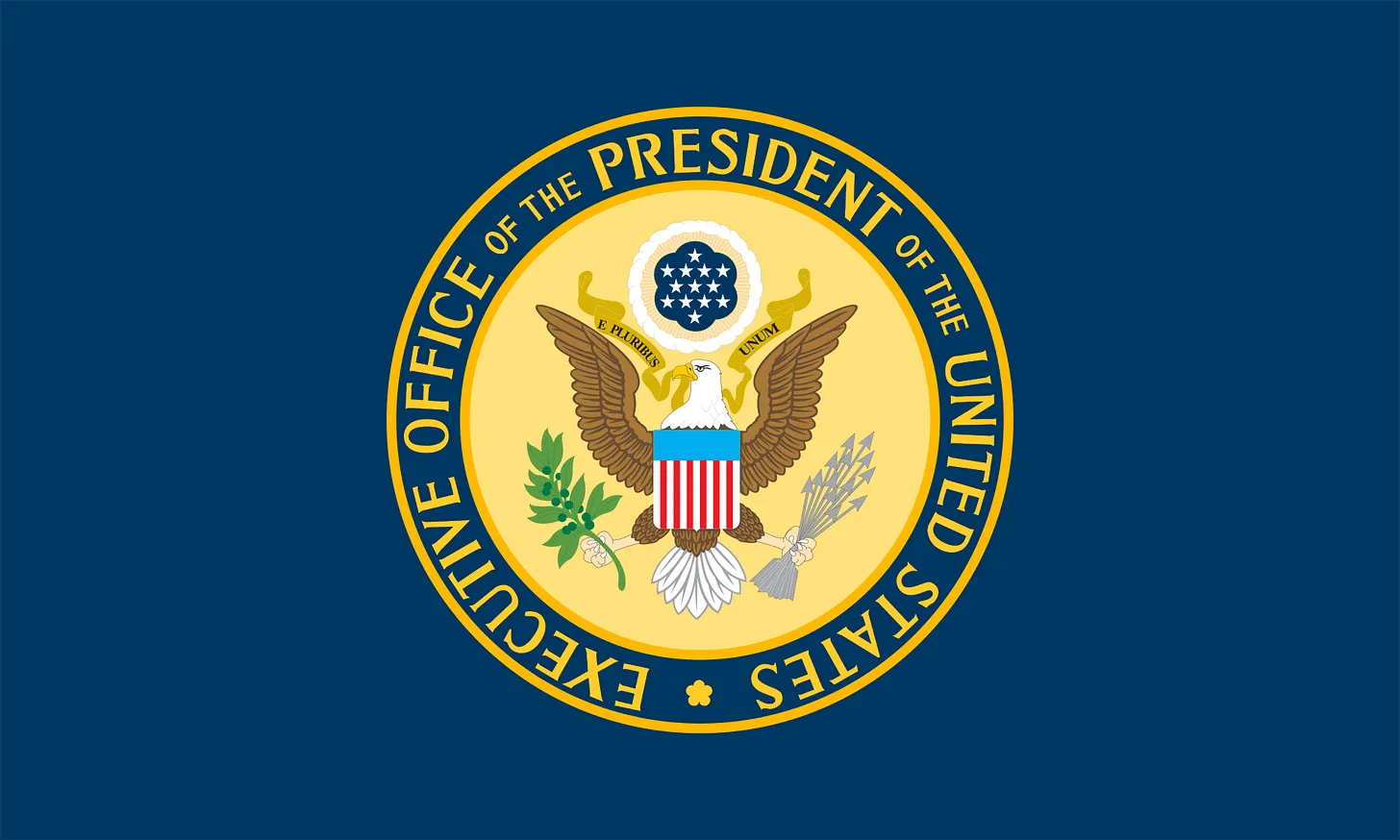
The EOP is like a corporation. Every Executive Branch office and agency reports to the EOP. There is one exception. The US Military reports to the President of the United States - It has to constitutionally. Now we have a shock for you - you don’t elect a President every four years as defined by the Constitution. You elect a CEO to lead the EOP, and you elect a commander in chief to lead the US Military.
The difference is subtle, but critical to understand. The Constitution says the American people will elect a President to lead the Executive Branch and command the US Military. What EO 8248 did was create a parallel position to the President of the United States. All agencies and offices report to the EOP - the elected President just happens to run the EOP. Presidents come and Presidents go, but the EOP remains.
This is one of the pillars on which the position of the President-King is built.
Oh, and the date that EO 8248 went active?
September 11, 1939.
The Game of Thrones
What we are going to show you is how the throne of the President-King was built. It is impossible to tie this constitutionally repugnant edifice to one administration. No, this required the involvement of many administrations. The President-King is a multi-decade construction project that involved both political parties. We will use that analogy as we show you how the position of the President-King was built.
Reagan - The Drafter
EO 12656 was signed on November 11, 1988. President Reagan signed a document that was rather chilling to those paying attention at the time.
A secret committee was convened earlier that had two familiar players as participants - Donald Rumsfeld, and Dick Cheney. Remember these two names, because we will be coming back to them soon.
What was so concerning about EO 12656?
This Executive Order allowed the government to suspend the Constitution and turn over all operations to FEMA during a declared emergency. FEMA would run the government until the emergency ended. However, EO 12656 did something more. This Executive Order allowed implementation of a COG plan whenever the Executive Branch decided there was an emergency.
Did you catch that? It’s a tectonic shift in policy. EO 12656 lowered the bar for suspension of the Constitution. It removed the requirement for a successful nuclear Pearl Harbor and changed that criteria to, “whenever the EOP decides there’s an emergency.”
https://www.archives.gov/federal-register/codification/executive-order/12656.html
The Berger Court - The Land Buyer
The Executive branch had assistance. One cannot discuss the modern administrative state and the EOP without the legal cover provided by the Supreme Court.
On June 25, 1984 Justice Stevens authored a 6-0 opinion that decided a case known as Chevron USA v. National Resources Defense Council. Chevron limited the power of the Judicial Branch over federal agencies. Chevron held that courts should defer to an agency’s drafting of a federal regulation when that authorship is delegated to the agency by congress. While on its face this decision appears to bolster the separation of powers as defined by the Constitution, in practice Chevron did three things;
1. Chevron handed a blank check to the Executive Branch, allowing its agencies to interpret and reinterpret regulations at will - and those regulations had the force of a law passed by congress. Chevron gave legal cover to the Executive Branch when it wanted to create law out of thin air.
2. Chevron allowed Congress to escape their constitutional responsibility of limiting the scope of laws and providing necessary limits to the power of the Executive Branch. This led to lazy bill writing with language such as, “The secretary shall determine…” This practice also placed We the People in constant legal jeopardy, because agency regulations could change suddenly with no constitutional way for the people to stop them.
3. Chevron restrained the Judicial Branch in its ability to prevent abuse of the citizen by the regulatory state. Future courts could point to Chevron in order to permit all sorts of constitutional violations by holding that they must defer to the agency rather than the constitution.
There were other Supreme Court cases that contributed to this problem, but Chevron was the big one that played a crucial role in the creation of the President-King.
https://www.law.cornell.edu/supremecourt/text/467/837
Clinton - The Surveyor
On October 21, 1998, President Clinton wrote a Presidential Decision Directive that drafted a COOP plan that was classified secret and then quietly tucked away . . .
[SNIP]