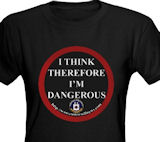
An increasingly hostile ruling class, who conceive of themselves as occupying a disloyal, irredentist America, is a formula for weakness abroad and conflict at home.
By Christopher Roach of amgreatness.com
February 9, 2021
One of Defense Secretary Lloyd Austin’s first actions after confirmation has been to order a “60 day stand down” to combat extremism. This follows the widespread and mostly baseless establishment fantasy that “right-wing extremists” and “white supremacists” are running rampant and pose some immediate threat to the country.
The details and definitions will ultimately determine whether this campaign is a sensible one that is in keeping with the Constitution or ends up being a purge of the overwhelmingly conservative ranks of the military. No reasonable person would object to removing dangerous and disloyal people from the service, but such a limited goal is distinct from punishing those with merely dissenting and idiosyncratic views. For example, a recent briefing among the Army’s Special Forces singled out Pepe the Frog and the Gadsden Flag as signs of extremism. These popular symbols—one an historical American flag—are widely embraced among the mainstream Right.
Austin’s other priorities do not signal moderation or common sense. He has ordered the services to allow transgender members to serve and enlist, including the right to “medically-necessary transition-related care.” He has also purged defense advisory boards of hundreds of Trump appointees without regard to their qualifications.
In the years ahead, we cannot rely on the uniformed military to resist Biden’s and Austin’s efforts. During the Trump years, many of the high-level military and civilian leadership actively or passively joined #TheResistance. But then, as now, they were merely following the political winds. Left-wing ideology is now becoming mandatory for the military and everyone else working for the government.
A History of Purges
The perverse use of left-wing ideology to transform the military began after the Tailhook scandal in the early 1990s. A raucous celebration of aviators became an excuse to conduct a full-scale purge of the naval officer corps in the mid-1990s, extending even to those who were not accused of any wrongdoing. The reduction of the services following the end of the Cold War provided many opportunities to get rid of those not onboard with the emerging feminist program and other priorities of the Clinton Administration.
In a controversial 1996 speech, former Navy secretary Jim Webb said that compliant civilian leadership and four-star naval leaders would “rather preserve or promote their careers and curry favor with politicians than support the service.”
The use of scandals as an excuse to purge the politically incorrect may have started with Tailhook, but it did not end there. A recent report arising from a series of crimes at Ford Hood went beyond practical findings—such as standardizing welfare checks for AWOL soldiers—to Marxist agitprop more familiar on college campuses. Group struggle sessions ensued, local civil rights activists were consulted, unverified statements were published without investigation or attribution, while the elephant in the room—widespread fraternization—went completely unmentioned. In the process, the Army canned 14 officers, and the report recommended placing sexual harassment investigators outside of the ordinary chain of command servicewide. Readiness will take a backseat.
Politicians’ widely expressed paranoia arising from the January 6 protests accelerated the focus on the military for perceived failures to adapt to the times. Representative Steve Cohen (D-Tenn.) openly expressed concern that so many “white Trump voters” are in the military. Hitherto unknown loyalty checks became normalized during the large-scale deployment of the National Guard during the inauguration.
An Apolitical Military or a Politicized One?
The military has a long tradition of being an apolitical institution subordinate to the civilian leadership. The presence of members from across the country has long made it a source of national unity.
That said, after the Vietnam War and the rise of the all-volunteer force, it became more insular and culturally distant from most of the country. It is particularly underrepresented in the northeast and the coastal centers of power. The military remains more male, more Southern, and more conservative than the nation at large.
The political traditions of other nations’ militaries are quite different. In some cases, the principle of loyalty to civilian leadership is less entrenched. In Turkey and Egypt, their armies have undertaken coups in the name of secular, nationalist ideologies. The German Wehrmacht of World War II had to swear a loyalty oath, not to the nation, but to Adolf Hitler himself.
The Soviet Army, throughout its history, was thoroughly politicized. In addition to the ordinary chain of command, parallel political officers—the infamous commissars—instilled ideological correctness in the ranks. These commissars acted as the eyes, ears, and voice of the Communist Party, policing soldiers and officers alike.
The Soviets were paranoid and ideological. On the eve of World War II, Stalin’s massive purge of experienced officers led to confusion, incompetence, and a string of defeats after the German invasion. Ideological fanaticism has real and practical consequences.
Judging by how things have proceeded in the academy and corporate America, concerns for prosaic goals like competence and talent will not do much to stop the military purge. The Left has shown itself to be completely dedicated to consolidating its power and has little direct experience with the needs of the military. Most important, the Left has no sense of fair play that would limit its designs.
Recall, this is the same Left-liberal establishment that tried to destroy the life of American hero Michael Flynn and willingly cashiered hard-to-replace aviators during the 1990s. If the current anti-extremist campaign is pursued with vigor, it will siphon off a great amount of talent necessary for national defense, whether in a conflict with China or otherwise.
For all the concerns about morale and inclusion, the one conspicuous gap from the Fort Hood report and the national conversation more generally is this: What about the morale of all those who don’t agree with this project and its leftist political foundations? . . .
[SNIP]