(Franco Iacch)
06/25/16
http://www.difesaonline.it/mondo-militare/f-35-ufficiale-si-valuta-nuovo-seggiolino-aumenta-il-costo-finale-del-velivolo
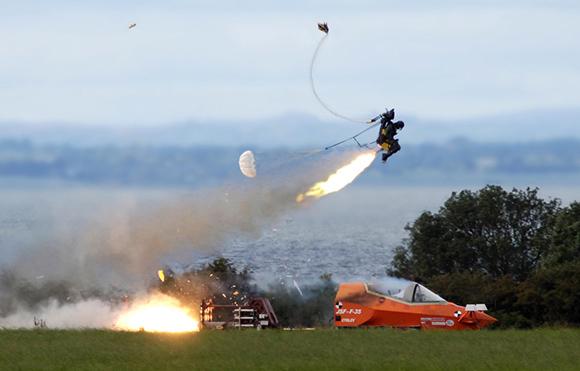
The USAF is looking into the possibility of replacing the ejection seat Martin-Baker of 'F-35 with the ACES 5 dell'United Technologies. Such a move, could have huge repercussions on the F-35 international chain. The USAF confirmation DefenseNews not only the interest for the model ACES 5, but also a note sent to the JPO (Joint Program Office) in order to assess the costs and the possible implications for the transition to the new seat.
The Defense Department is working with Martin Baker and Lockheed Martin on three main corrections: designing a lighter helmet to reduce pressure on the rider's neck, installing a system that will delay the deployment of the main parachute and the installation of a panel support for his head in his parachute straps.
In the seat built by the British company Martin-Baker, it was found a "potentially fatal mistake for the life of the pilot." This error, already has a number of potential victims: one-third of the pilots who will fly the F-35. During the ejection, so we are in an emergency situation, the system would cause a whiplash so violent because of an incorrect position of the chair propelled outside the aircraft. The risk, recognized by the Department of Defense, is real for drivers between 60 and 65 pounds.
Tests have shown that the pilots, whose weight approaches slightly at fault or excess at 135-140 pounds, have a probability of death of 98% during the expulsions to 160 knots. For those who do not know it is the average speed of a take-off or landing. The enabled American pilots with the F-35 that fall into this weight category are constantly increasing. Their license was suspended and will continue to fly only on simulators. But the problem may have been underestimated because the percentage of risk remains high even for pilots with an average weight.
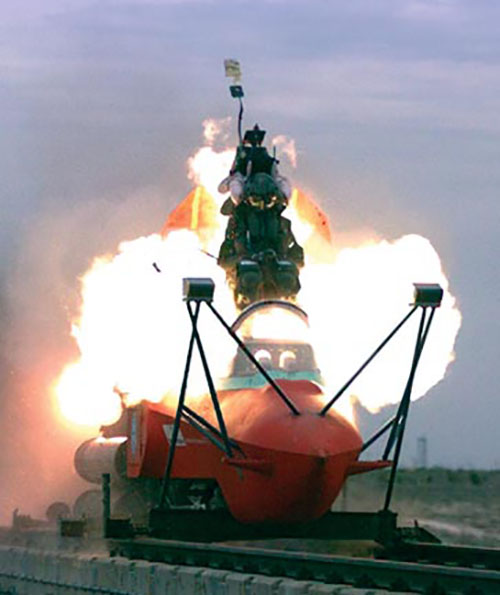
We need to mitigate risk - confirmed by the Pentagon - we are evaluating the alternative represented by ACES model 5.
"We believe it is prudent to determine the cost, the impact on programming and on the timeline drawn up".
The note at the JPO was sent last Thursday. From the Air Force they point out that "it is not requested a different configuration of the aircraft, but only the possible transition costs."
The Pentagon hoped to solve the problem with a sort of "switch". The device, already tested, it would be adjusted according to the rider's weight. When sitting at the controls a lighter rider, the eject device delays the release of the parachute of a fraction of a second, thought to be capable of reducing the impact on the pilot's neck. E 'it was also added a support device between the straps of the parachute to prevent the head of the pilots in the phase of ejection to perform unnatural and potentially fatal movements. The two changes, according to the Pentagon, will be in production by the end of 2016. Estimated latter, considered too optimistic by Congress that provides for at least a year of testing and optimization prior to production on a large scale. The problem with the helmet, instead, require even more time.
A rider who weighs 60 pounds, can not wear the current helmet $ 400,000. A driver with a weight of 60 pounds (of excess tolerance and defect of two pounds), has one chance in 50,000 of suffering a neck injury in the event of expulsion. Drivers who weigh between 63 and 74 pounds, have less risk with a probability of 200 thousand of suffering a potentially fatal neck injury. Engineers are trying to reduce the weight of the helmet to prevent injuries to the neck, potentially lethal, for the drivers during ejection from the aircraft. The helmet currently weighs 5.1 pounds. The minimum safety threshold to reduce the risks threatening is 4.6 / 4.8 pounds.
According to the report of the Department of Defense, the corrections on the helmet weight are delayed by at least nine months compared to the other two solutions identified. It would be correct to note that the restrictions will remain in force until three changes will not work. Implementations require at least a year of testing. It was expected that the three corrections were implemented by the summer of 2017. The Air Force, in an email last January 8, it acknowledged that the corrections will be implemented by December 2018.
The ACES 5 has a stabilization system that the company calls "STAPAC" and a headrest which pushes the riders upside down during ejection. It needs to figure out why the Air Force, is only now considering an option, eight months after it had found problems related to the safety of the drivers. Martin-Baker is part of the industrial participation strategy of the F-35 program. If the Air Force were to opt for the seat ACES 5, the repercussions in economic terms could be devastating for both the final cost of the aircraft to mitigate lost revenue.
(Photo: Martin Baker)
---
IZAKOVIC