





AD-DUMAYR, SYRIA — A little over a year ago — just after the Syrian army and its allies liberated the towns and villages around eastern Ghouta from the myriad armed jihadist groups that had waged a brutal campaign of torture and executions in the area — I interviewed a number of the civilians that had endured life under jihadist rule in Douma, Kafr Batna and the Horjilleh Center for Displaced People just south of Damascus.
A common theme emerged from the testimonies of those civilians: starvation as a result of jihadist control over aid and food supplies, and the public execution of civilians.
Their testimonies echoed those of civilians in other areas of Syria formerly occupied by armed anti-government groups, from Madaya and al-Waer to eastern Aleppo and elsewhere.
Despite those testimonies and the reality on the ground, Western politicians and media alike have placed the blame for the starvation and suffering of Syrian civilians squarely on the shoulders of Russia and Syria, ignoring the culpability of terrorist groups.
In reality, terrorist groups operating within areas of Syria that they occupy have had full control over food and aid, and ample documentation shows that they have hoarded food and medicines for themselves. Even under better circumstances, terrorist groups charged hungry civilians grotesquely inflated prices for basic foods, sometimes demanding up to 8,000 Syrian pounds (US $16) for a kilogram of salt, and 3,000 pounds (US $6) for a bag of bread.
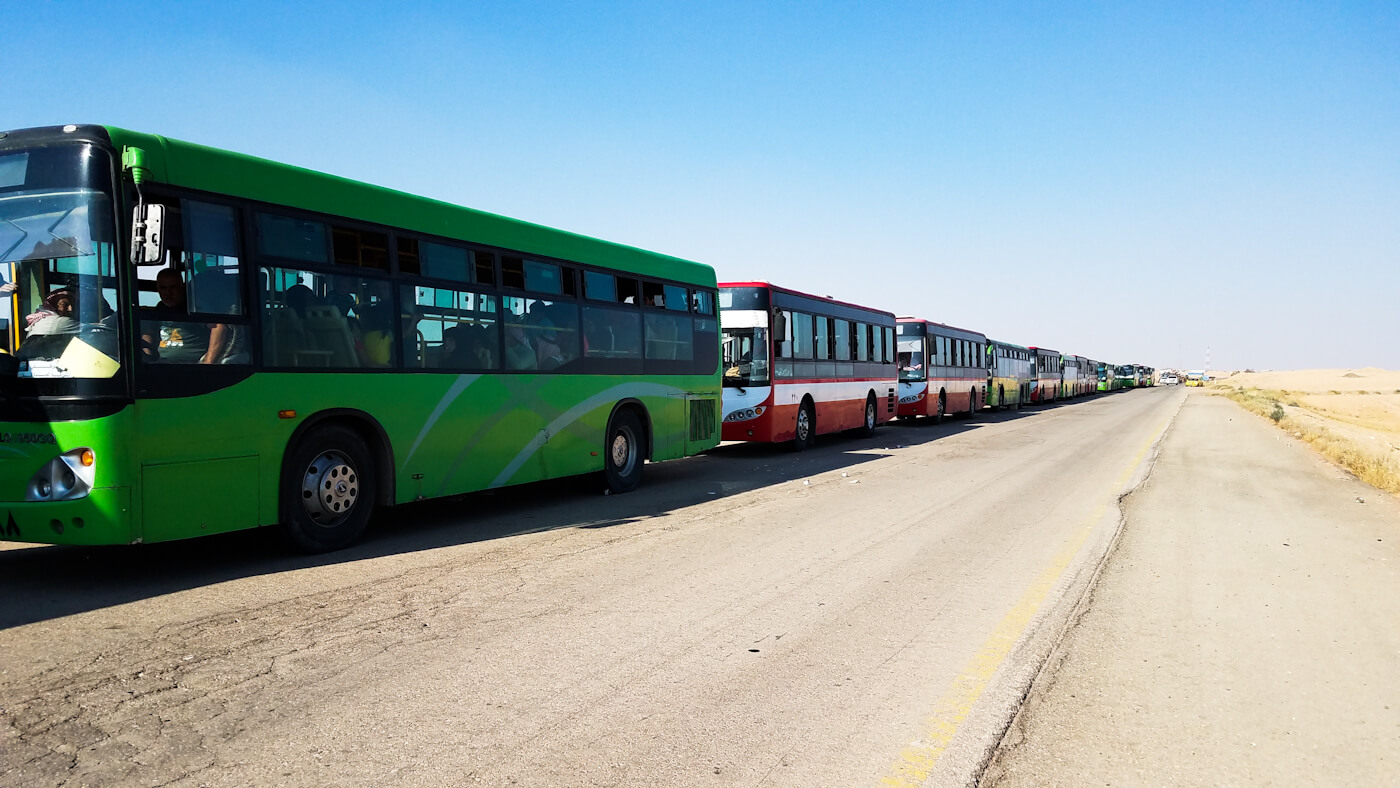
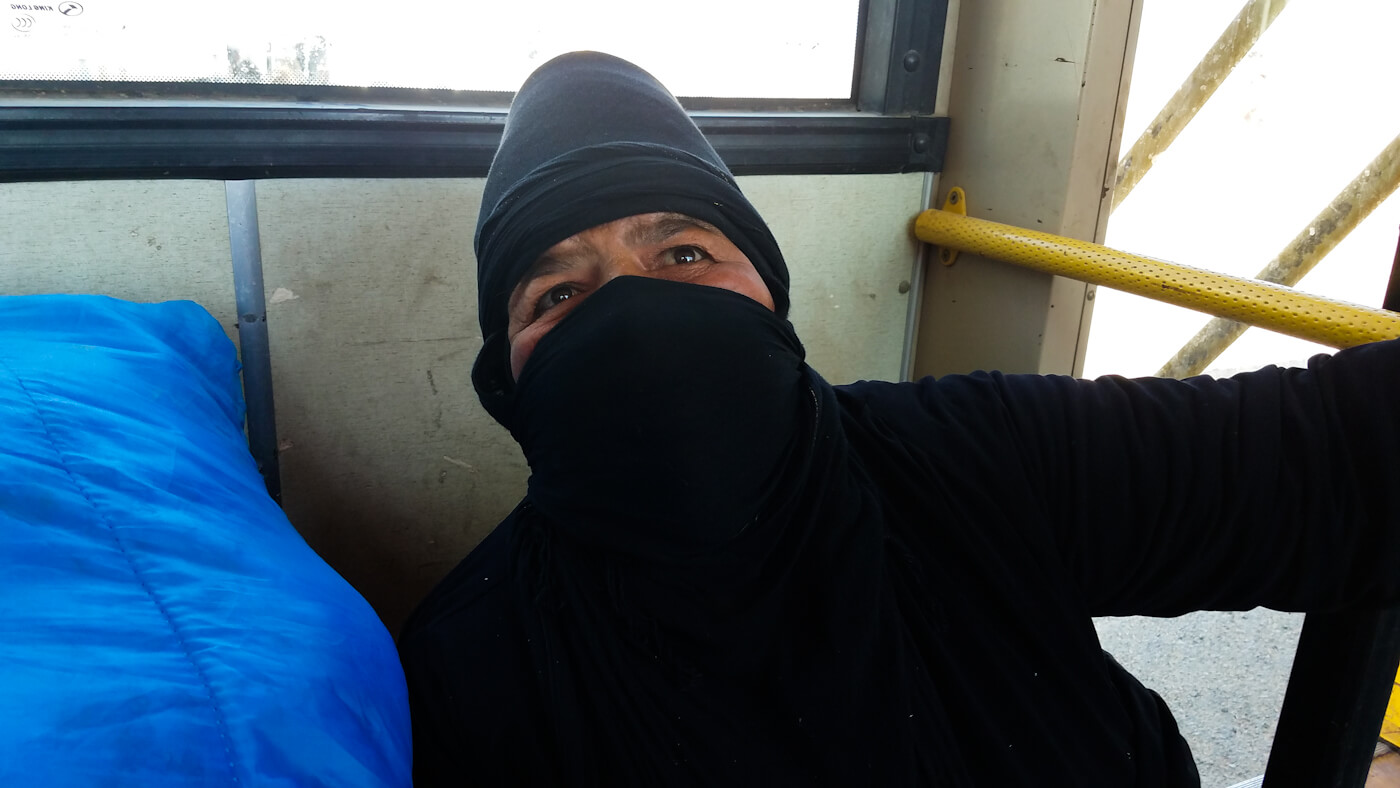
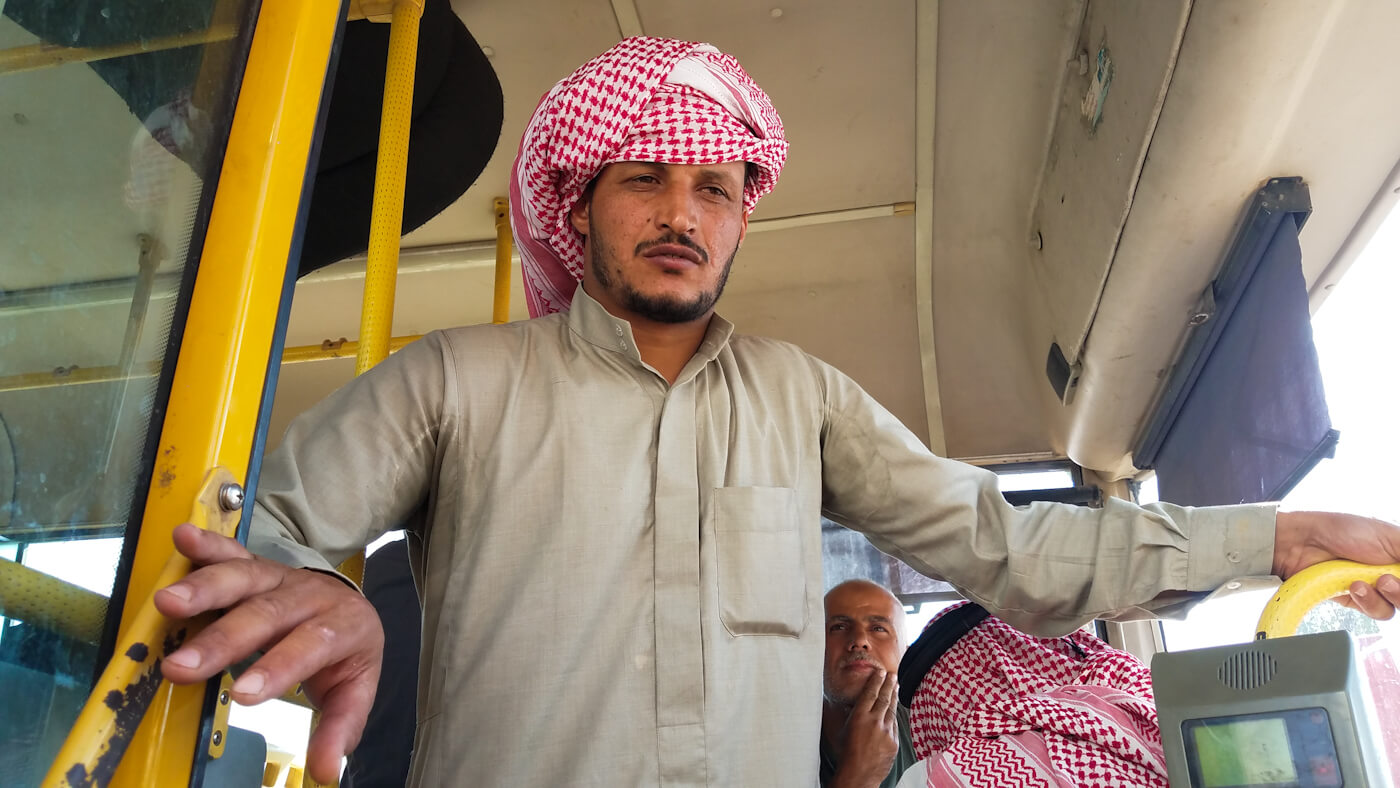
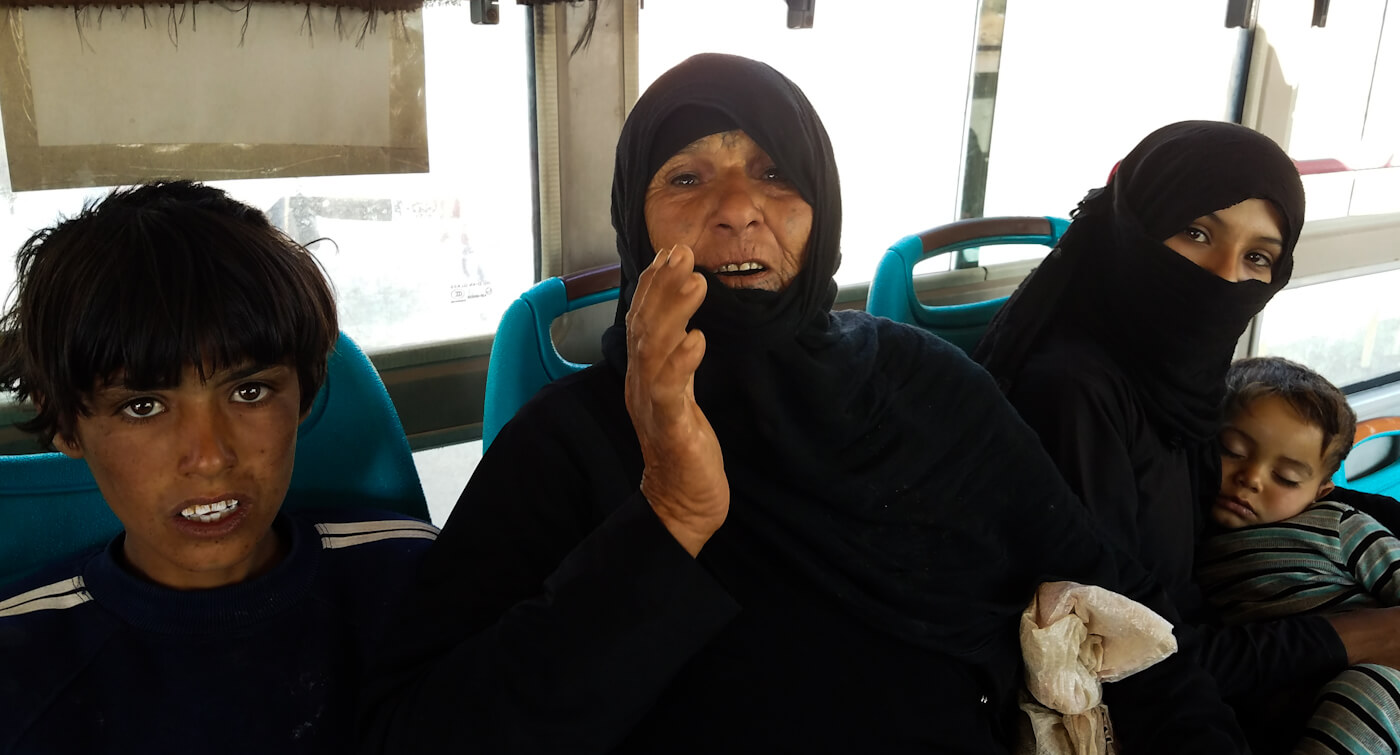
Given the Western press’ obsessive coverage of the starvation and lack of medical care endured by Syrian civilians, its silence has been deafening in the case of Rukban — a desolate refugee camp in Syria’s southeast where conditions are appalling to such an extent that civilians have been dying as a result. Coverage has been scant of the successful evacuations of nearly 15,000 of the 40,000 to 60,000 now-former residents of Rukban (numbers vary according to source) to safe havens where they are provided food, shelter and medical care.
Silence about the civilian evacuations from Rukban is likely a result of the fact that those doing the rescuing are the governments of Syria and Russia — and the fact that they have been doing so in the face of increasing levels of opposition from the U.S. government.
A harsh, abusive environment
Rukban lies on Syria’s desolate desert border with Jordan, surrounded by a 55-km deconfliction zone, unilaterally established and enforced by the United States, and little else aside from the American base at al-Tanf, only 25 km away — a base whose presence is illegal under international law.
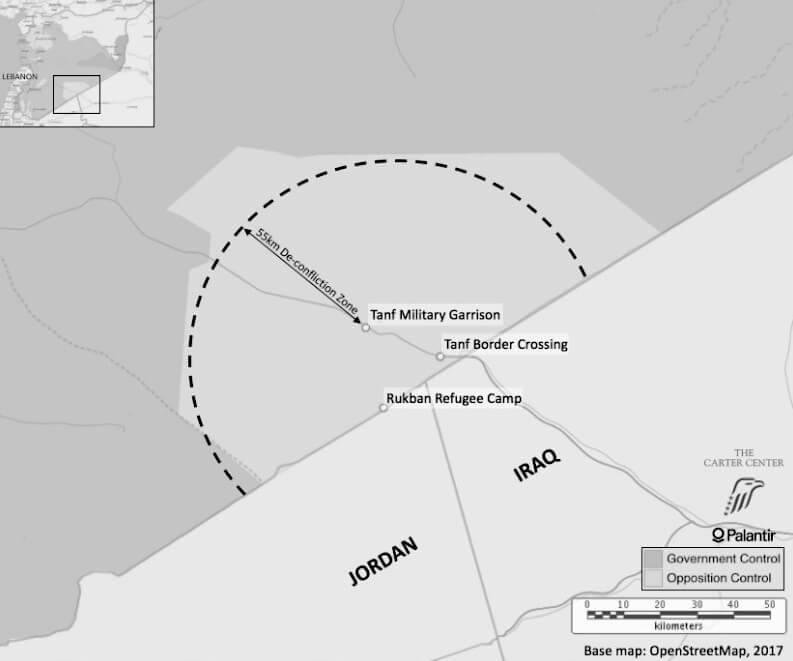
It is, by all reports, an unbearably harsh environment year-round and residents of the camp have endured abuse by terrorist groups and merchants within the camp, deprived of the very basics of life for many years now.
In February, the UNHCR reported that young girls and women in Rukban have been forced into marriage, some more than once. Their briefing noted:
Many women are terrified to leave their mud homes or tents and to be outside, as there are serious risks of sexual abuse and harassment. Our staff met mothers who keep their daughters indoors, as they are too afraid to let them go to improvised schools.”
The Jordanian government, home to 664,330 registered Syrian refugees, has adamantly refused any responsibility in providing humanitarian assistance to Rukban, arguing that it is a Syrian issue and that keeping its border with Syria closed is a matter of Jordan’s security — this after a number of terrorist attacks on the border near Rukban, some of which were attributed to ISIS and one that killed six Jordanian soldiers.
According to U.S. think-tank The Century Foundation, armed groups in Rukban have up to 4,000 men in their ranks and include:
Maghawir al-Thawra, the Free Tribes Army, the remnants of a formerly Pentagon-backed group called the Qaryatein Martyr Battalions and three factions formerly linked to the CIA’s covert war in Syria: the Army of the Eastern Lions, the Martyr Ahmed al-Abdo Forces, and the Shaam Liberation Army.”
Those armed groups, according to Russia, include several hundred ISIS and al-Qaeda recruits. Even the Atlantic Council — a NATO- and U.S. State Department-funded think-tank consistent in its anti-Syrian government stance — reported in November 2017 that the Jordanian government acknowledged an ISIS presence in Rukban.
The Century Foundation also notes the presence of ISIS in Rukban and concedes that the U.S. military “controls the area but won’t guarantee the safety of aid workers seeking access to the camp.”
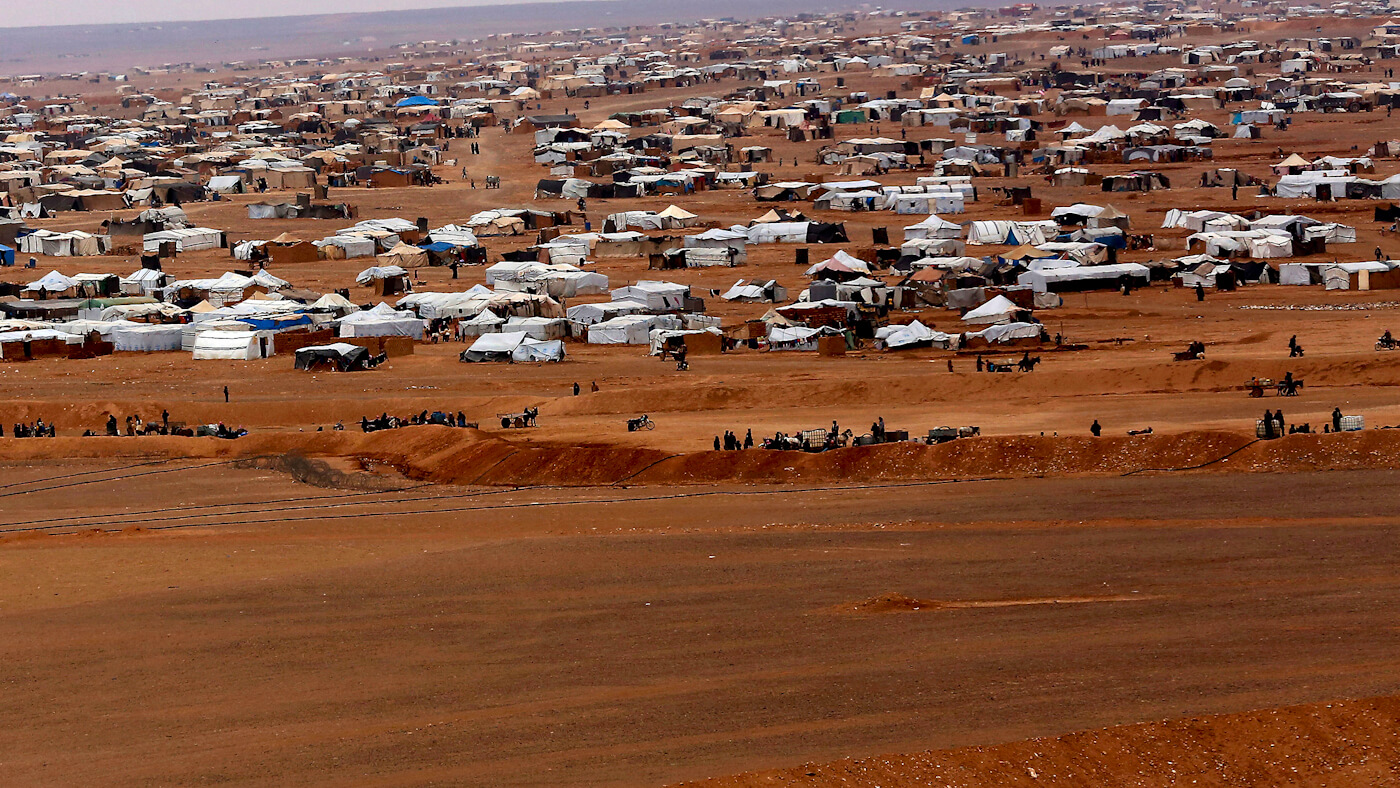
The Rukban camp, sandwiched between Jordan, Syria borders and Iraq, Feb. 14, 2017. Raad Adayleh | AP
Syria and Russia have sought out diplomatic means to resolve the issue of Rukban, arguing repeatedly at the United Nations Security Council for the need to dismantle the camp and return refugees to areas once plagued by terrorism but that have now been secured.
As I wrote recently:
The U.S. stymied aid to Rukban, and was then only willing to provide security for aid convoys to a point 10 kilometres (6.2 miles) away from the camp, according to the UN’s own Emergency Relief Coordinator, Mark Lowcock. So, by U.S. administration logic, convoys should have dropped their Rukban-specific aid in areas controlled by terrorist groups and just hoped for the best.”
The U.S., for its part, has both refused the evacuation of refugees from the camp and obstructed aid deliveries on at least two occasions. In February, Russia and Syria opened two humanitarian corridors to Rukban and began delivering much-needed aid to its residents.
Syria’s Permanent Representative to the United Nations, Ambassador Bashar al-Ja’afari, noted in May 2019 that Syria agreed to facilitate the first aid convoy to Rukban earlier this year, but the convoy was ultimately delayed by the United States for 40 days. A second convoy was then delayed for four months. Al-Ja’afari also noted that the U.S., as an occupying power in Syria, is obliged under the Geneva Conventions to provide food, medicine and humanitarian assistance to those under its occupation.
Then, in early March, the Russian Center for Reconciliation reported that U.S. authorities had refused entry to a convoy of buses intending to enter the deconfliction zone to evacuate refugees from Rukban.
According to a March 2019 article from Public Radio International:
[W]hen Syrian and Iranian forces have entered the 34-mile perimeter around the base, American warplanes have responded with strikes — effectively putting Rukban and its residents under American protection from Assad’s forces.”
Despite the abundance of obstacles they faced, Syria and Russia were ultimately able to evacuate over 14,000 of the camp’s residents to safety. In a joint statement on June 19, representatives of the two countries noted that some of the camp’s residents were forced to pay “militants” between $400 to $1000 in order to leave Rukban.
Media reports on Rukban … from abroad
While Rukban — unlike Madaya or Aleppo in 2016 — generally isn’t making headlines, there are some pro-regime-change media reporting on it, although even those reports tend to omit the fact that civilians have been evacuated to safety and provided with food and medical care.
Instead, articles relieve America and armed Jihadist groups of their role in the suffering of displaced Syrians in Rukban, reserving blame for Syria and Russia and claiming internal refugees are being forced to leave against their will only to be imprisoned by the Syrian government.
Emad Ghali, a “media activist,” has been at the center of many of these claims. Ghali has been cited as a credible source in most of the mainstream Western press’ reporting on Rukban, from the New York Times, to Al Jazeera, to the Middle East Eye. Cited since at least 2018 in media reporting on Rukban, Ghali has an allegiance to the Free Syrian Army, a fact easily gleaned by simply browsing his Facebook profile. He recently posted multiple times on Facebook mourning the passing of jihadist commander and footballer Abdul Baset al-Sarout. As it turns out, Sarout not only held extremist and sectarian views, but pledged allegiance to ISIS, among other less-than-noble acts ignored by most media reports that cite him.
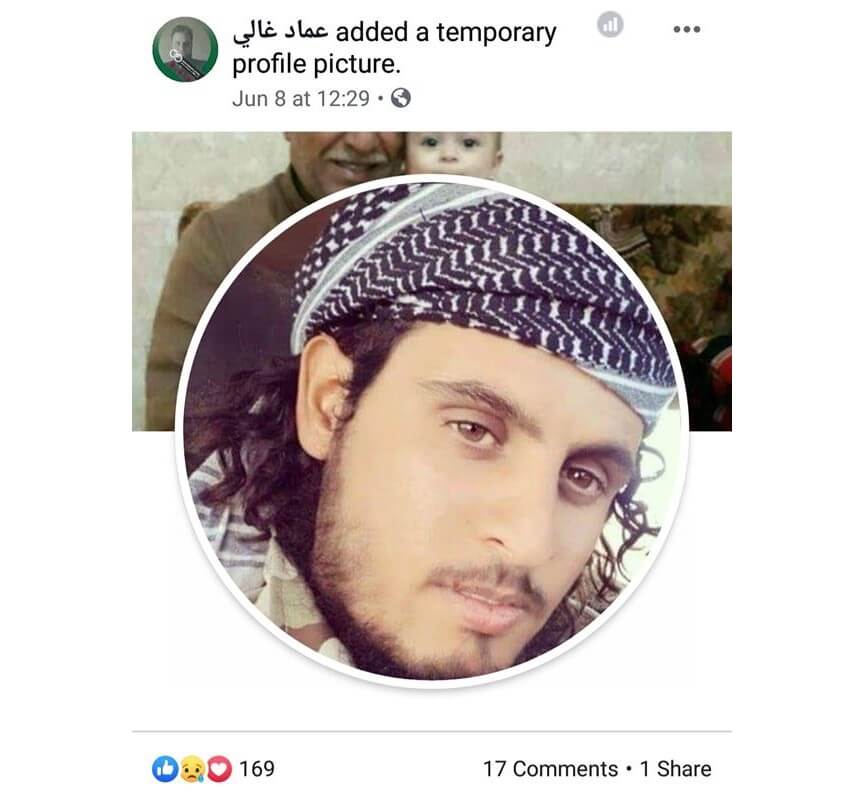
Ghali paid homage to ISIS commander Abdul Baset al-Sarout on his Facebook page
Citing Ghali as merely a “media activist” is not an unusual practice for many covering the Syrian conflict. In fact, Ghali holds the same level of extremist-minded views as the “sources” cited by the New York Times in articles that I reported on around the time Ghouta was being liberated from jihadist groups in 2018.
Four sources used in those articles had affiliations to, and/or reverence for the al-Qaeda-linked Jaysh al-Islam — including the former leader Zahran Alloush who has been known to confine civilians in cages, including women and children, for use as human shields in Ghouta — Faylaq al-Rahman, and even to al-Qaeda, not to mention the so-called Emir of al-Qaeda in Syria, the applauded Abu Muhammad Al-Julani.
Claims in a Reuters article of forced internment, being held at gunpoint in refugee centers, come from sources not named in Rukban — instead generically referred to as “residents of Rukban say”…
An article in the UAE-based The National also pushed fear-mongering over the “fate that awaits” evacuees, saying:
[T]here is talk of Syrian government guards separating women and children from men in holding centres in Homs city.There are also accusations of a shooting last month, with two men who had attempted an escape from one of the holding centres allegedly killed. The stories are unconfirmed, but they are enough to make Rukban’s men wary of taking the government’s route out.”
Yet reports from those who have actually visited the centers paint a different picture.
An April 2019 report by Russia-based Vesti News shows calm scenes of Rukban evacuees receiving medical exams by the Syrian Arab Red Crescent, who according to Vesti, have doctors there every day; and of food and clean, if not simple, rooms in a former school housing displaced refugees from Rukban. Notably, the Vesti journalist states: “There aren’t any checkpoints or barriers at the centre. The entrance and exit are free.”
The Russian Reconciliation Center reported on May 23 of the refugee centers:
In early May, these shelters were visited by officials from the respective UN agencies, in particular, the UNHCR, who could personally see that the Syrian government provided the required level of accommodation for the refugees in Homs. It is remarkable that most of the former Rukban residents have already relocated from temporary shelters in Homs to permanent residencies in government-controlled areas.”
Likewise, in the Horjilleh Center which I visited in 2018 families were living in modest but sanitary shelters, cooked food was provided, a school was running, and authorities were working to replace identity papers lost during the years under the rule of jihadist groups.
Calling on the U.S. to close the camp
David Swanson, Public Information Officer Regional Office for the Syria Crisis UN Office for the Coordination of Humanitarian Affairs based in Amman, Jordan, told me regarding claims of substandard conditions and of Syrians being forcefully held or mistreated in the centers that,
People leaving Rukban are taken to temporary collective shelters in Homs for a 24-hour stay. While there, the receive basic assistance, including shelter, blankets, mattresses, solar lamps, sleeping mats, plastic sheets, food parcels and nutrition supplies before proceeding to their areas of choice, mostly towards southern and eastern Homs, with smaller small numbers going to rural Damascus or Deir-ez-Zor.
The United Nations has been granted access to the shelters on three occasions and has found the situation there adequate. The United Nations continues to advocate and call for safe, sustained and unimpeded humanitarian assistance and access to Rukban as well as to all those in need throughout Syria. The United Nations also seeks the support of all concerned parties in ensuring the humanitarian and voluntary character of departures from Rukban.”
Hedinn Halldorsson, the Spokesperson and Public Information Officer for the United Nations Office for the Coordination of Humanitarian Affairs (OCHA) based in Damascus, told me:
We looked into this when the rumours started, end of April, and concluded they were unfounded – and communicated that externally via press briefings in both Geneva and NY. The conditions in the shelters in Homs are also adequate and in compliance with standards; the UN has access and has done three monitoring visits so far.”
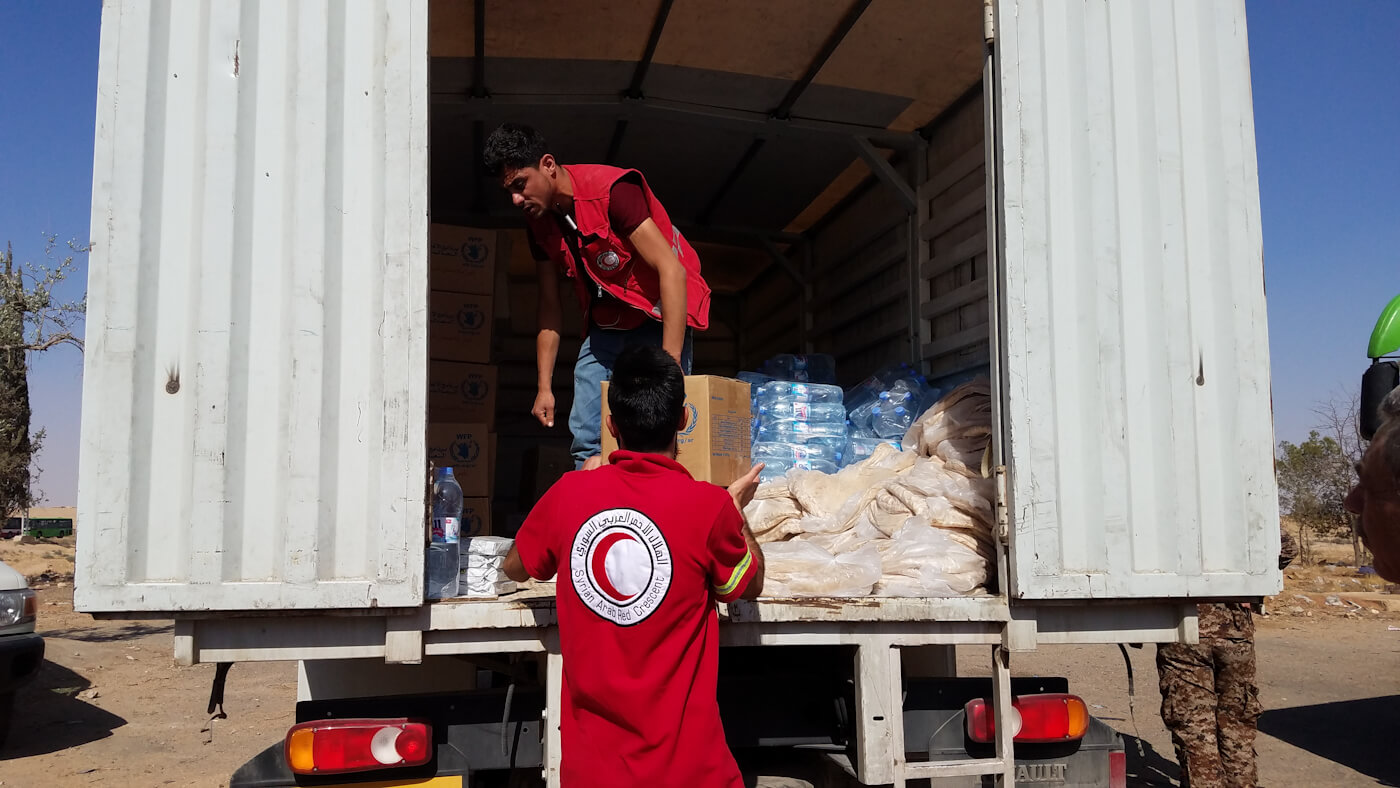 Syrian Arab Red Crescent members unload food and water for Rukban’s evacuees. Photo | Eva Bartlett